How White Upholstery and Antique Wood Work Together
Build contrast through materials
The white living room featured in this reference relies on material changes rather than a busy color palette. Soft seating and a pale rug sit against darker flooring, while a marble coffee table introduces a smoother surface. The contrast helps separate the pieces even when several of them share similar light tones. Boucle upholstery adds another layer of texture without demanding an additional accent color.
Use old wood as a visual anchor
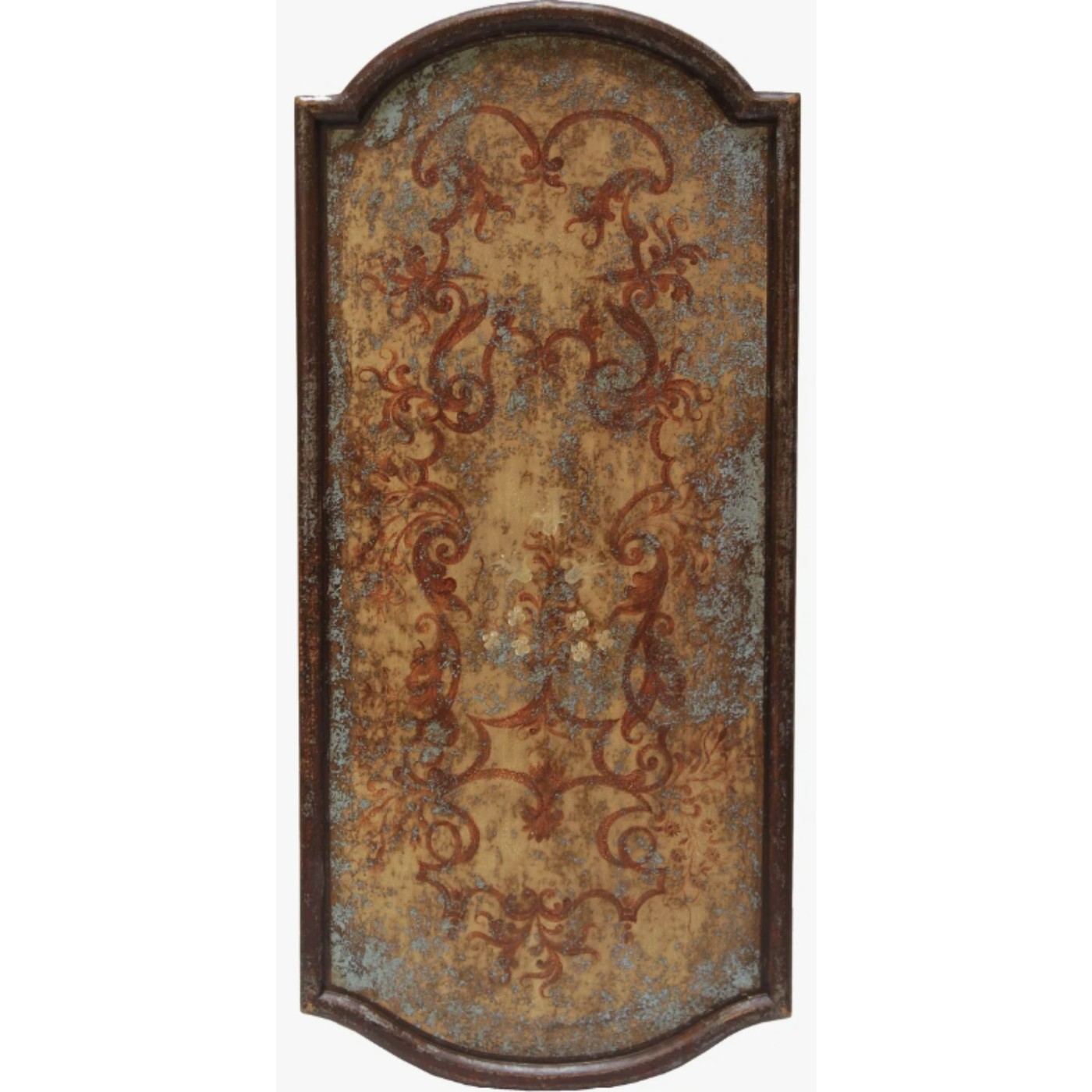
Painted antique wooden panels provide a warmer counterpoint to the modern furniture. Their scale also draws attention to the height of the room, giving the wall a stronger role in the arrangement. For a similar direction, consider how an artwork's material and proportions relate to the nearby seating. An individually meaningful antique or natural object can make a minimal setting feel more personal, rather than simply adding another decorative item.
Use the dark floor as part of the composition
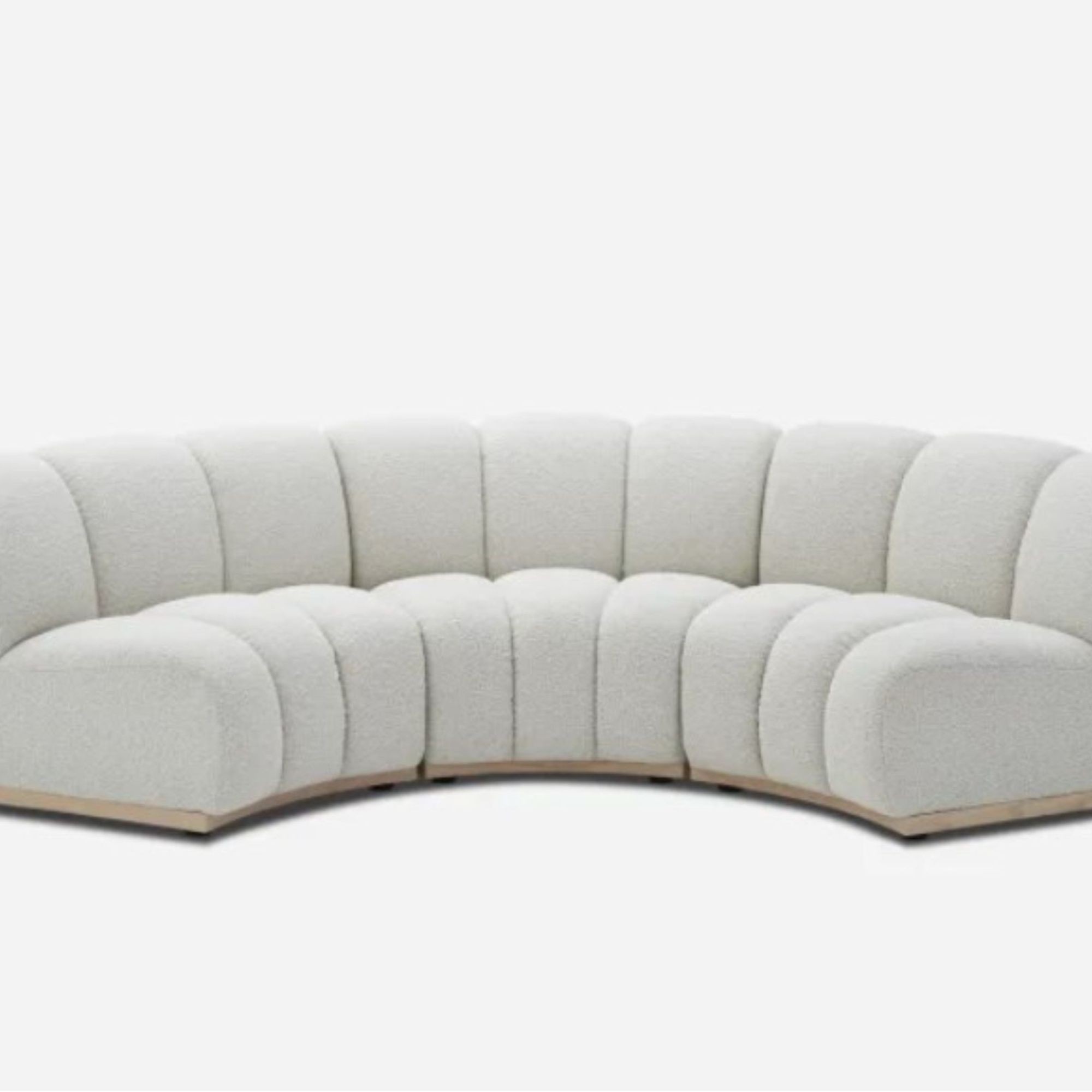
The published example combines a white sofa and boucle chairs with a soft white rug laid over dark flooring. That contrast gives the pale seating group a recognizable boundary rather than allowing each white piece to disappear into its neighbor. A marble coffee table introduces a harder, smoother material within the upholstered group. These are specific material relationships to consider when adapting the idea, rather than instructions that every neutral room needs the same furniture or the same number of seats.
Choose wall pieces for their scale and meaning
Painted antique wooden panels add both age and vertical emphasis beside the room's more minimal furnishings. The article's art discussion also considers the owner's relationship with a work, not simply whether its colors match. Look at material, dimensions, and the story an object brings before copying its appearance with a new purchase. A useful adaptation might retain an existing heirloom while simplifying nearby decoration, allowing an older piece to contribute character without turning the whole room into a period reproduction.
Use the artwork to read the room vertically
The art advisers in Homes and Gardens focus on the height emphasized by the wooden panels, not only their warm color. Consider the whole wall above the seating before selecting an object with a similar appearance. A tall work can make the vertical dimension visible, while a group of smaller works creates a different rhythm. Measure the actual wall and relate the proposed arrangement to the sofa beneath it. The published room is an example of proportion, not evidence that an antique panel of the same dimensions will fit every living space or suit every viewing position.
Ask a more useful question than whether the colors match
Katharine Earnhardt's advice asks whether a work is interesting to its owner: its material, structure, story, and subject can matter alongside immediate liking. That changes the shopping process from finding an object that repeats the sofa color to understanding what will hold attention over time. An existing family piece may supply that interest without a new purchase. Look at it from the seating area and consider the conversation or memory it brings into the room. Personal significance cannot be inferred from a celebrity photograph, so the relevant adaptation is the selection process rather than copying the exact object.
Separate the photographed design from the shopping edit
The reference includes a retail selection of antique-style panels, curved upholstery, a vase, a faux-marble table, and a wooden tray. Those are suggestions for interpreting the aesthetic, not a verified inventory of the homeowner's possessions. Keep that distinction when comparing materials. A faux-marble finish can echo a pale stone surface without having the same composition or care requirements, and a newly made distressed panel is not automatically an eighteenth-century antique. Use the visual relationship as inspiration, then check the actual item's dimensions, construction, maintenance needs, and suitability for the household before making a buying decision.
Adapt the contrast using pieces already present
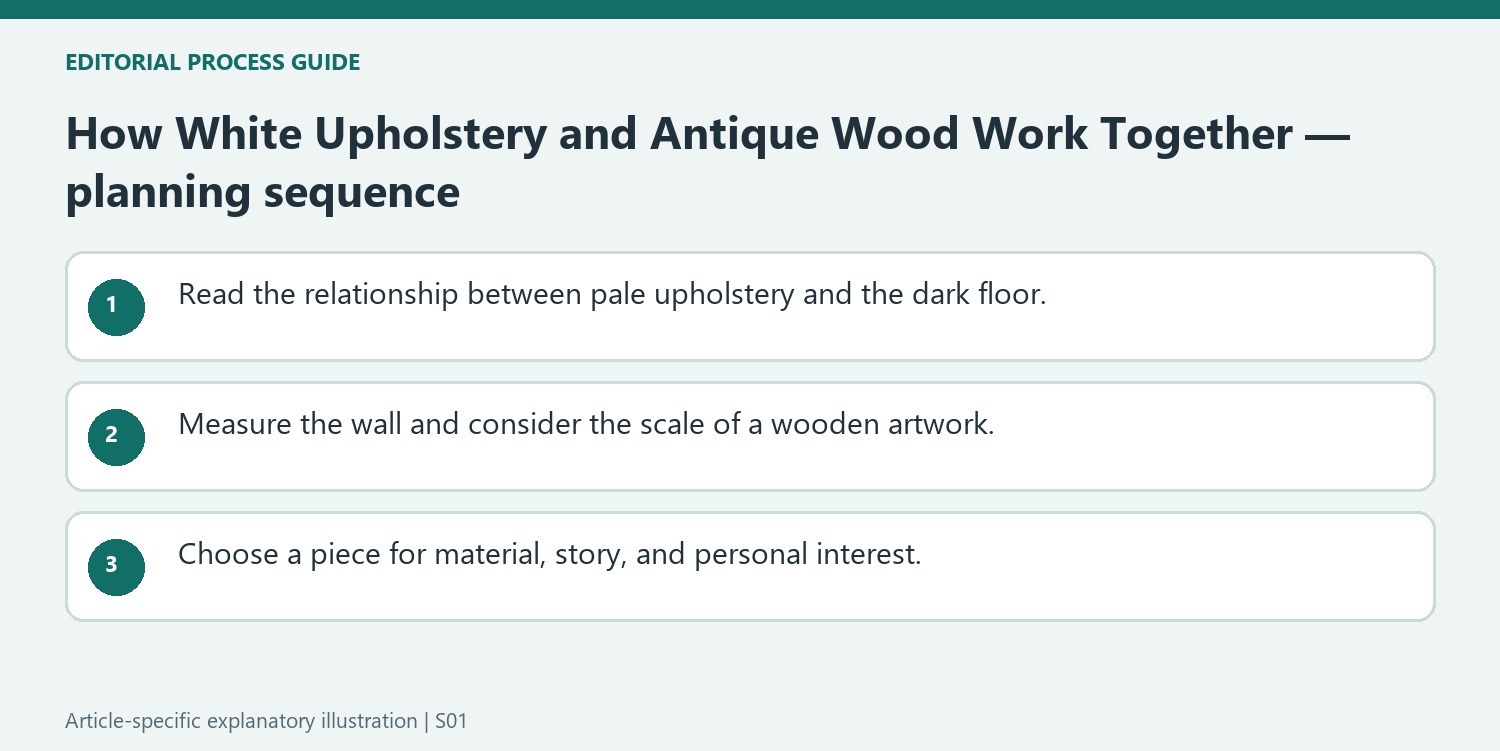
One possible application begins with the existing pale seating rather than replacing it. Identify a darker boundary, such as the floor or another substantial element, then add a warm natural surface where the room feels visually flat. Keep the artwork's scale and the different textures visible instead of surrounding them with many competing accessories. This is an illustrative way to use the source's relationships, not a claim about another owner's home. Reassess from the doorway and the usual chair: the room should read coherently from both positions while retaining practical table space and comfortable routes between seats.
References
- Kendall Jenner’s Living Room Pairs 18th-Century Wooden Antiques with Minimalist Decor to Perfect the All-White Aesthetic. Homes and Gardens; Megan Slack.
A restrained white room gains depth from contrasting textures, dark flooring, and expressive wooden artwork.


Leave a Comment
Comments (0)