Mix Kitchen Wood Tones with Intentional Contrast
Give the different finishes distinct roles
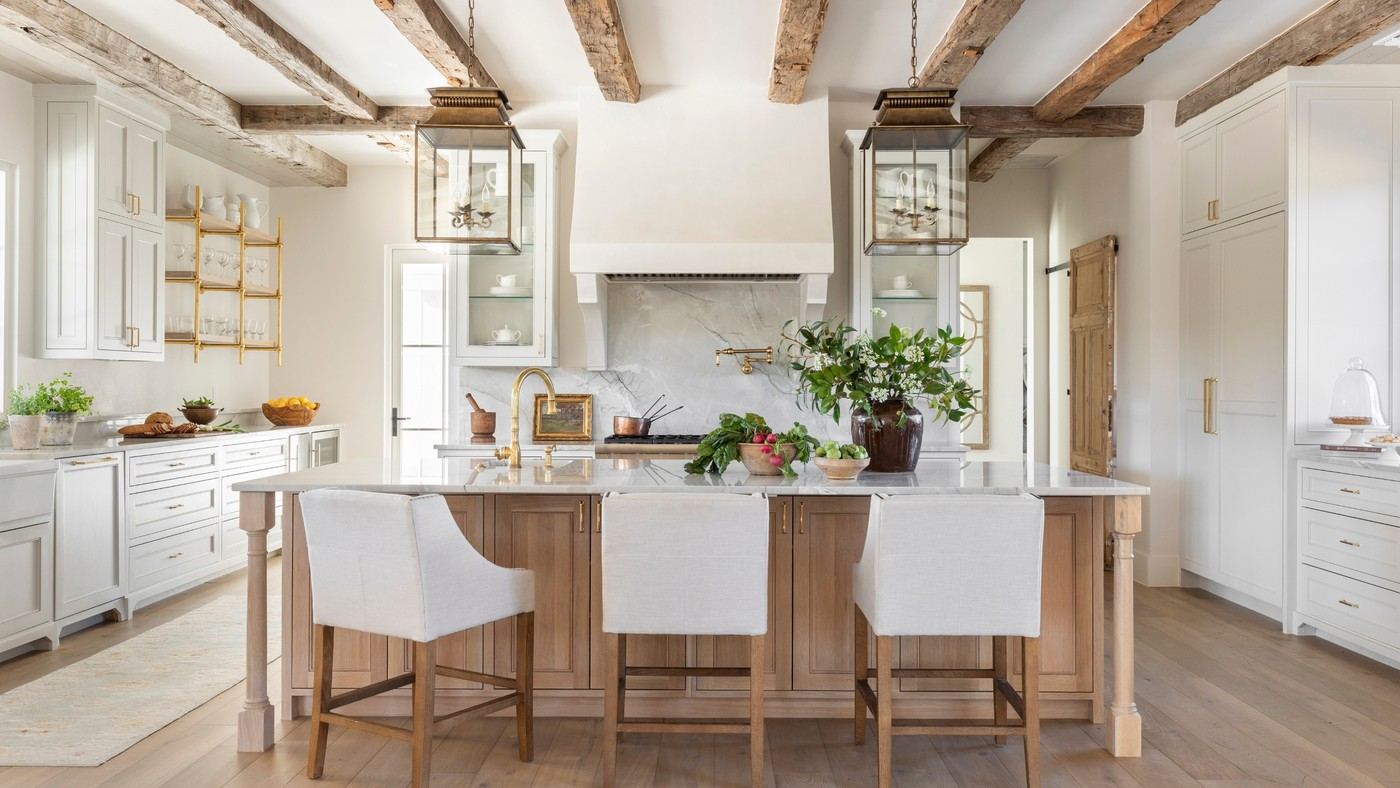
The source recommends deliberate contrast when combining wood in a kitchen. Lighter upper cabinets and darker lower cabinets can separate the two areas, while a different island finish establishes a focal point. Existing ceiling beams may add another timber tone because they are part of the home's architecture. Rather than attempting a near match everywhere, consider how each wooden element contributes to the composition.
Look for a compatible underlying tone
Another approach is to choose a common base stain or related undertone, then vary the lightness or darkness of the finishes. This provides connection without requiring identical wood throughout. Painted cabinetry can also sit alongside natural timber, giving another form of contrast. Judge the floor, cabinets, island, and original features together before deciding. The strongest mixture feels like a considered relationship among materials rather than an accidental collection of almost-matching surfaces.
Give the different finishes a clear hierarchy
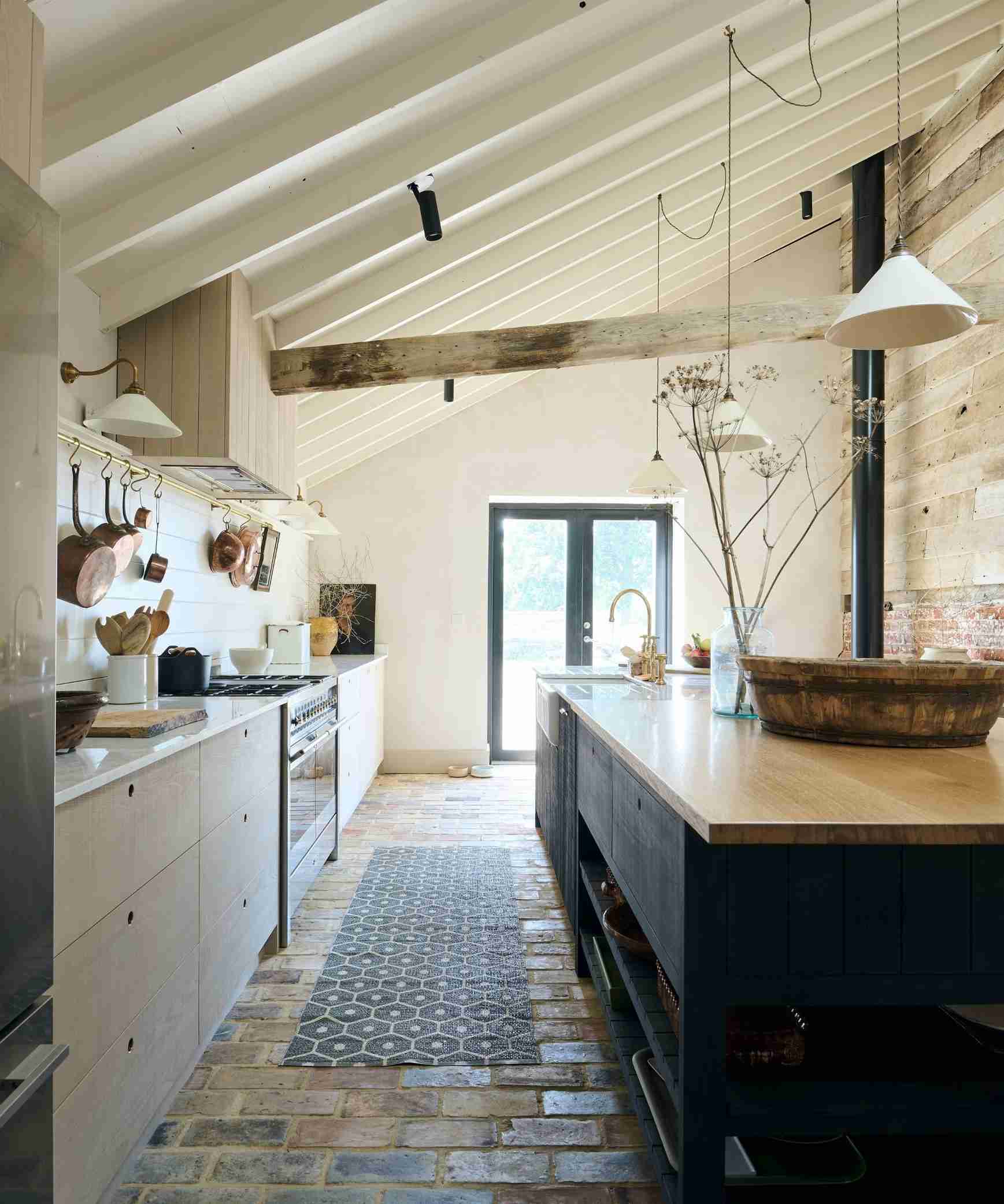
Becky Shea suggests using lighter upper cabinets with darker lower ones, or distinguishing an island through another tone. Original beams can provide an additional timber element whose history explains its presence. Start with those large fixed surfaces and decide which one should lead. That makes a later wooden stool or board easier to assess than choosing several small items first and trying to make the main cabinetry match them.
Compare grain as well as the base color
The designers recommend compatible undertones and grain patterns, since two similarly colored woods can still compete through strongly different figuring. A shared stain direction can allow lighter and darker versions to feel related. Hardware, stone, or a consistent paint accent can provide further continuity. Put samples side by side under the intended kitchen lighting and consider their relative areas; a small sample's busy grain becomes much more conspicuous across an entire bank of doors.
Decide which difference should be obvious
Becky Shea's examples use lighter upper cabinets, darker lower ones, or a separately toned island to establish intentional contrast. The location of the difference helps explain it. Before choosing two stains, decide whether the island should read as a distinct furnishing or whether the cabinetry should remain more continuous. Include original ceiling beams and flooring in that decision, because an existing architectural timber is already part of the palette. An illustrative elevation can show whether the proposed contrast reinforces the kitchen's forms or cuts across them awkwardly. Painted cabinetry can provide a quieter partner to wood, so a mixed scheme does not require every cabinet door to display a different grain or tone.
Compare grain before relying on a shared color label
The source treats undertone, species, and grain as separate considerations. Two warm woods may still differ sharply in how busy their surfaces appear. A strongly figured floor beside heavily knotted cabinet fronts can create more movement than intended even when both are described as oak. Look at representative samples rather than one unusually uniform piece, and compare them beside the actual countertop and hardware. A similar species in lighter and darker finishes can create unity, but the stain name alone does not establish the result. Different woods absorb and display finishes differently. Keep the chosen contrast visible enough to feel purposeful while allowing quieter areas for the materials to be understood as separate parts of one kitchen.
Test a secondary tone through a less permanent element
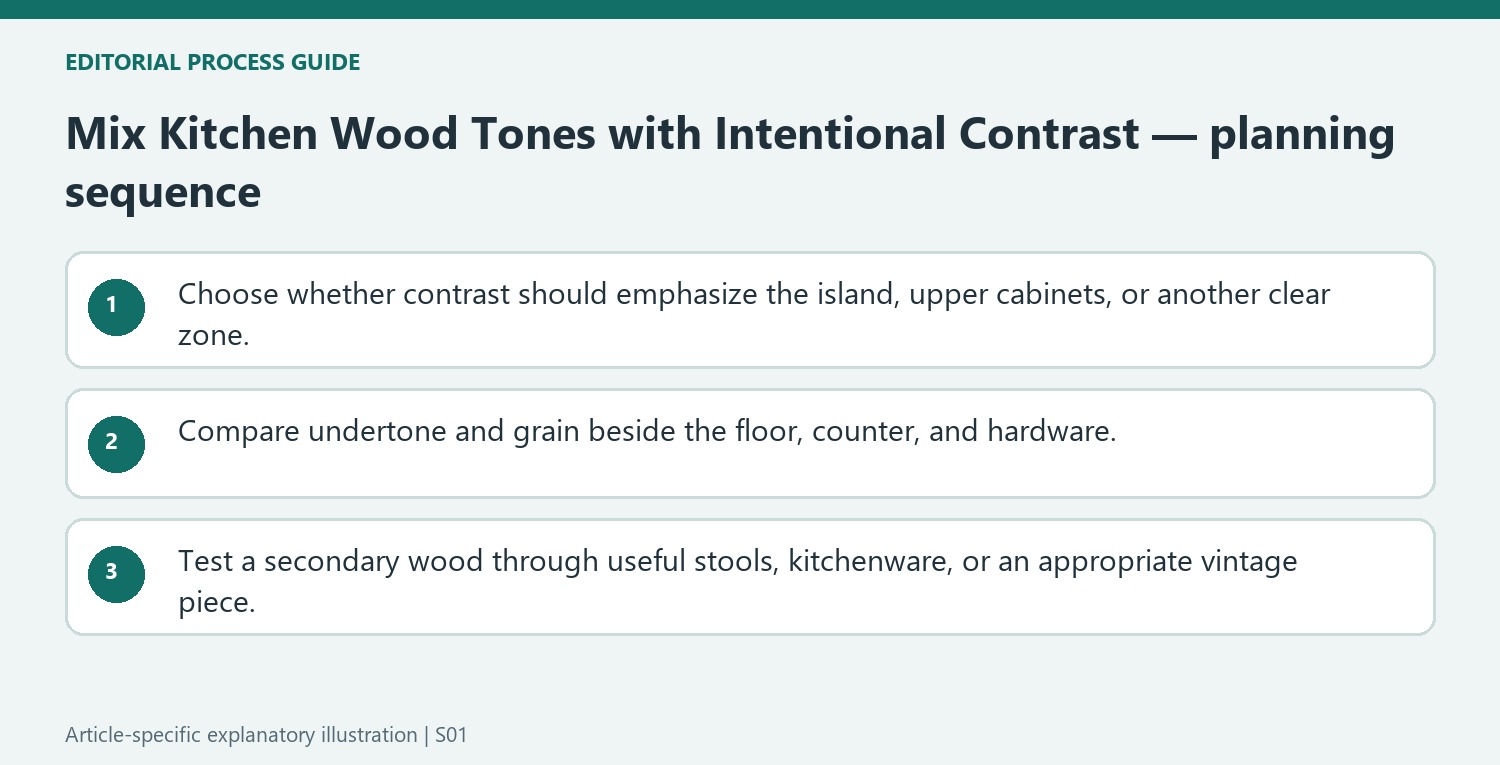
Kailee Blalock and Taylor Troia suggest stools, accessories, and vintage furniture as ways to introduce another wood character. A woven seat also adds a textural difference beside smoother cabinetry without depending entirely on stain variation. Choose an item that serves a real need and compare its proportions with the worktop and surrounding routes. A vintage hutch may contribute history and storage, but it needs suitable space and condition; its age does not automatically make it the right kitchen addition. Smaller kitchenware offers a more limited trial before a cabinet or island project. The article's different methods can be used selectively, with the dominant wood and the existing fixed finishes determining how much new variation is useful.
References
- Thinking about mixing wood tones in your kitchen? Here's how to do it tastefully, according to interior designers. Homes and Gardens; Molly Malsom.
Different cabinet, island, and beam finishes can belong together when their relationship is clear.


Leave a Comment
Comments (0)