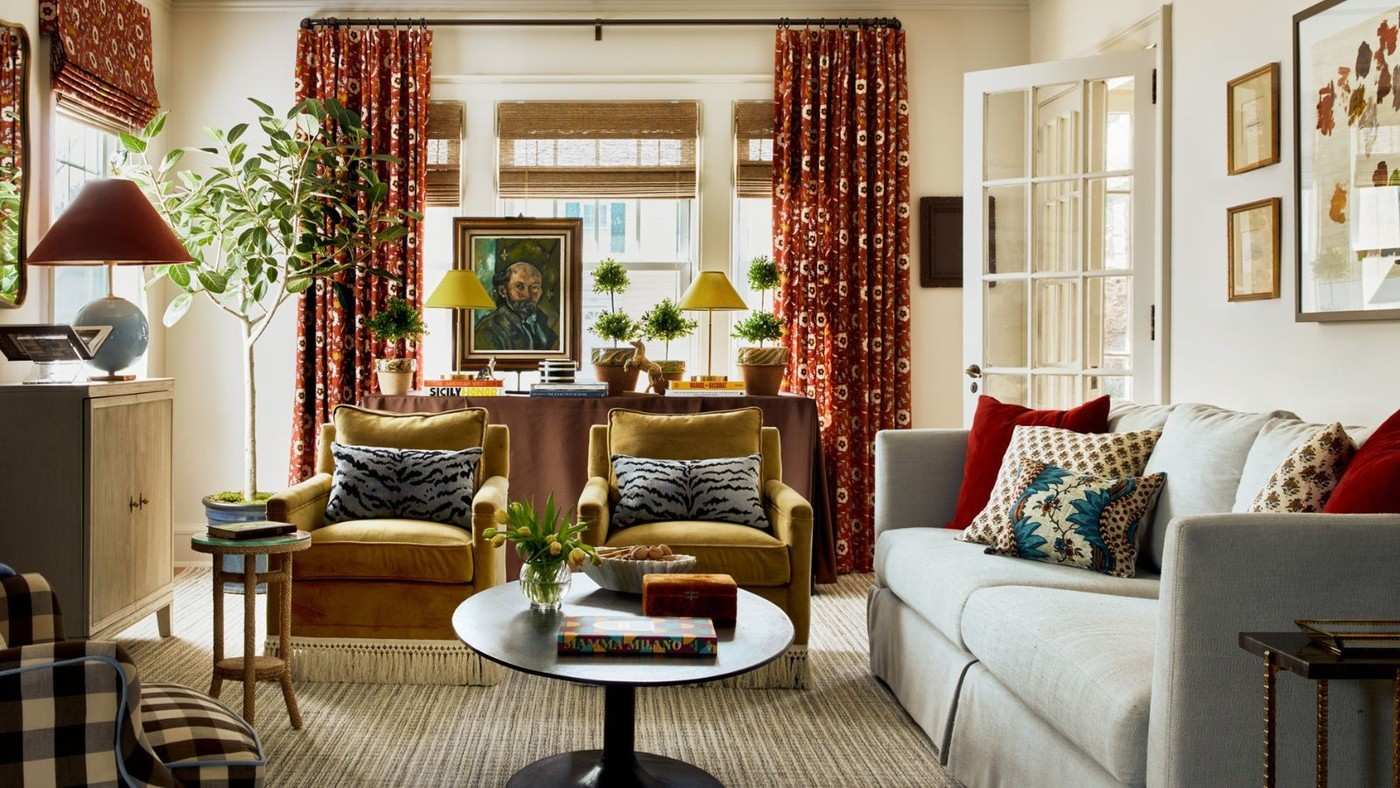
Bring Fall Warmth through Tactile Layers
The designers in this reference approach fall decorating through texture rather than simply adding more objects. Wool, mohair, chunky knits, and boucle introduce softer surfaces, while rich wood and aged metal provide a contrasting background. These materials can make an existing room feel more suited to cooler evenings.
Earthy greens, rusty reds, mustard, and brown extend the seasonal mood through color. Choose layers that have a purpose within the room, whether that is a useful throw or a cushion that connects neighboring fabrics. A thoughtful combination of textures and tones can feel warmer without turning the space into an overcrowded seasonal display.
Build warmth through several distinguishable materials
Marie Flanigan discusses wool and mohair alongside timber and aged metals, while Ali Henrie mentions chunky knits, boucle, wool, and softer plaids. These materials introduce depth because their surfaces respond differently to touch and light. Start with the upholstery and larger textiles already present. A textured blanket or cushion can provide the seasonal contrast without changing every item in the room.
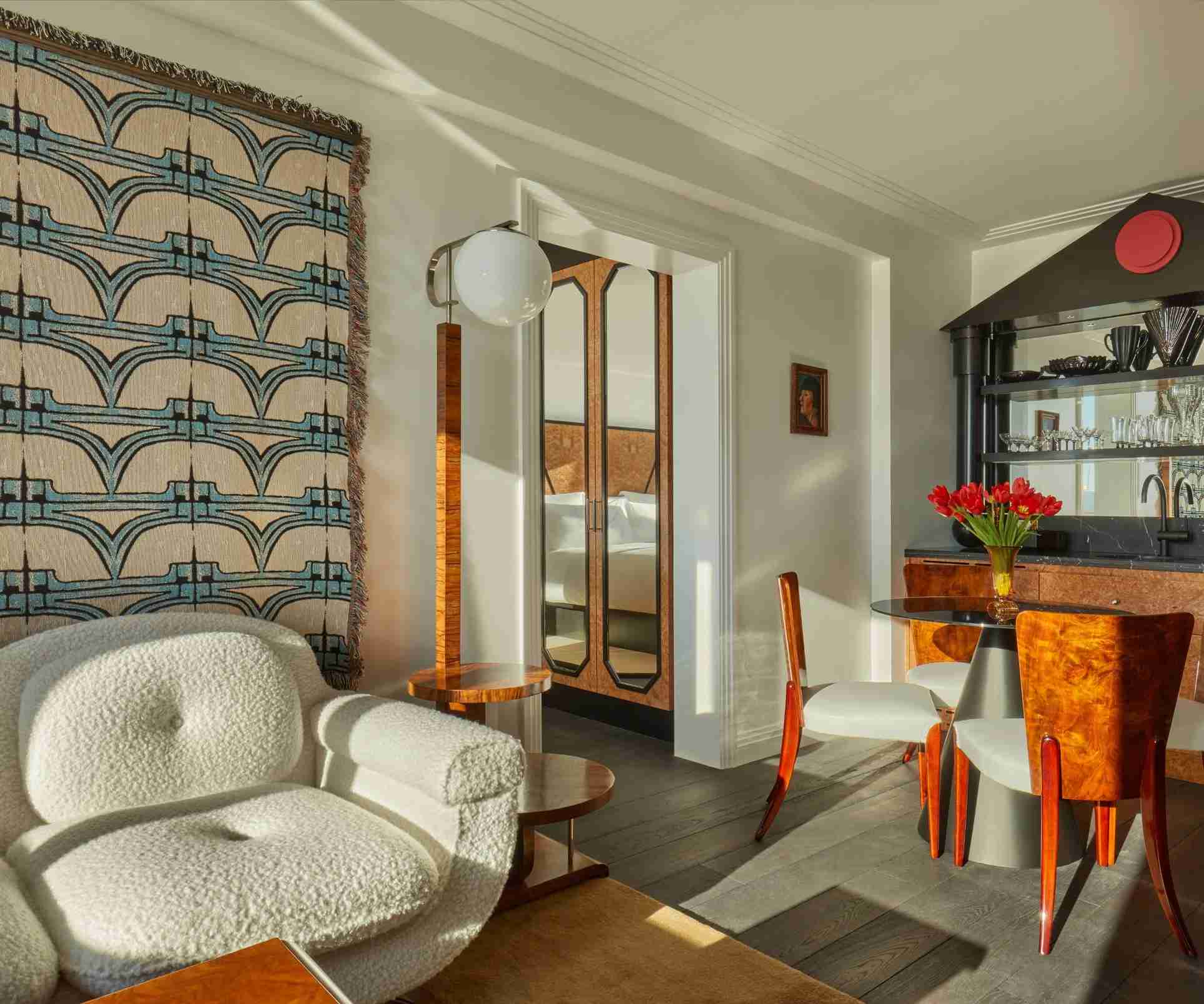
Compare surface sheen as well as autumn color
Jennifer Press highlights the relationship between quieter grasscloth or wool and more lustrous velvet. Brianna Untener similarly combines textured walls or soft drapery with sleeker accents. These examples show why a room can feel layered even when its colors remain restrained. Deep green, rust, mustard, and brown are options in the feature, but choose the ones that connect with existing finishes. Place a sample textile against the sofa and view it in daytime and evening light before committing to a larger piece. Aim for a usable mix of warmth, texture, and visual contrast rather than adding heavy fabrics solely to meet a seasonal palette.
Build contrast outward from one grounding surface
Franky Rousell suggests beginning with a dominant texture and adding contrasting finishes. That offers a practical way to avoid layering by quantity alone. Identify whether the room's starting point is woven upholstery, timber, a rug or a quieter wall surface, then choose one different quality that makes that foundation easier to appreciate.
The source pairs rough with smooth and matte with polished. A sleeker table beside textured upholstery may provide more depth than another nearly identical cushion. Keep a related tone or material recurring elsewhere so the contrast feels intentional. This makes the arrangement readable while preserving the useful surfaces and furniture already serving the household.
Use light and pattern at different scales
The designers discuss multiple sources of light rather than depending solely on one overhead fitting. Table lamps, wall lights and other suitable fixtures can create different areas of emphasis. Evaluate the actual tasks and available light before adding another lamp mainly for its shade pattern or autumnal appearance.
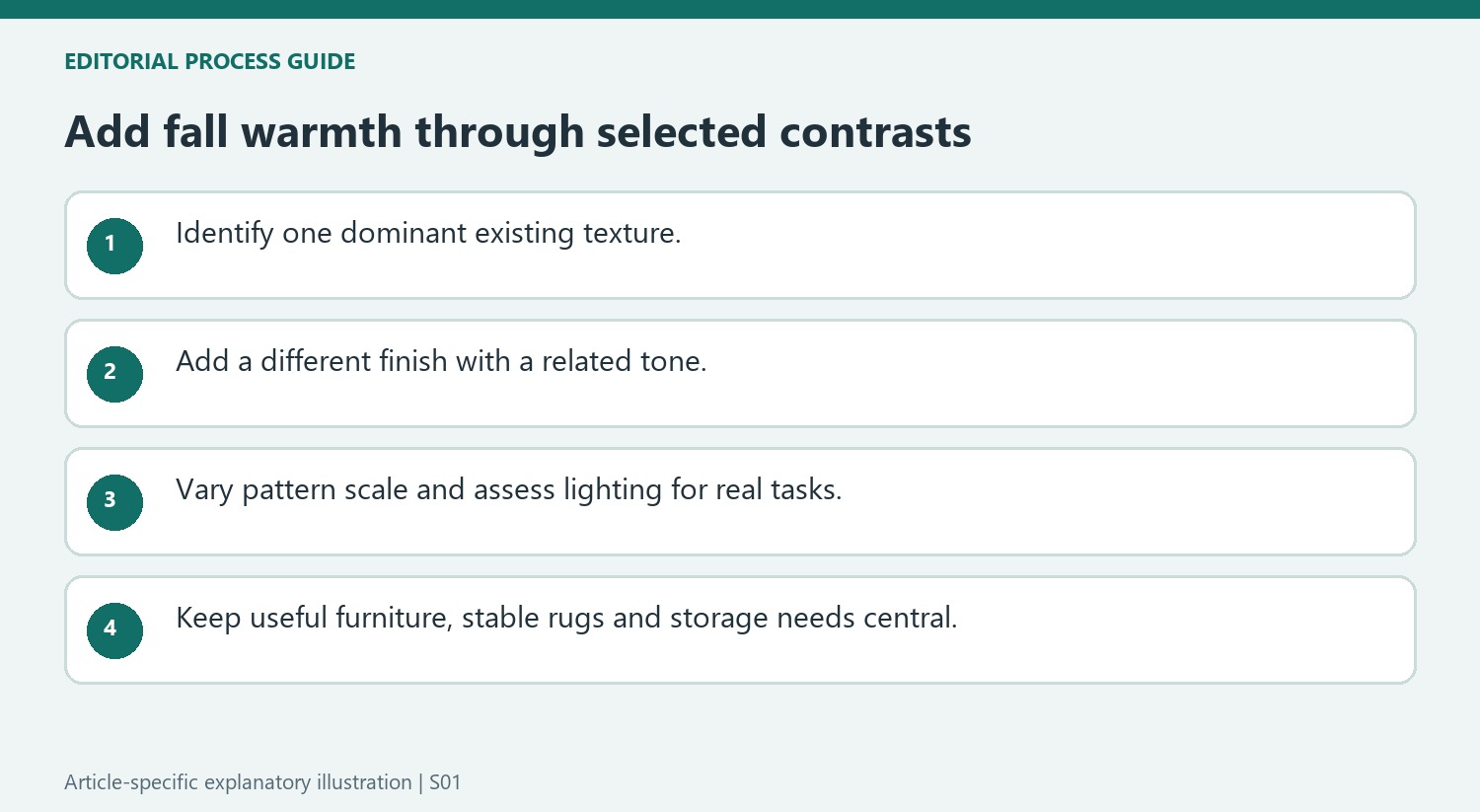
Pattern also works through relationships. The source suggests mixing a larger geometric with a finer floral when a shared color connects them, or setting a quieter plaid against solid fabric. Begin with the strongest existing pattern and vary the next layer's scale. This provides each textile with a clearer role instead of making several similarly busy designs compete for equal attention.
Let useful furniture and textiles carry the seasonal mood
The article extends layering to movable drink tables, art and kitchen window treatments. These examples show that softness and depth need not be concentrated only on the sofa. Choose the area where another practical surface, a textile or a clearer focal point would improve daily use.
Rug layering is another option in the source, but the actual placement must remain stable and easy to move across. Consider maintenance and seasonal storage before adding a plush layer over an existing floor covering. A warmer-looking room should still work comfortably. Keep the focus on selected contrasts, useful warmth and personal belongings, using the designers' suggestions as a way to assess the present room rather than a shopping checklist for an entirely new seasonal interior.
References
- How to Wrap Your Home in Warmth – Designers Reveal the Layering Secrets That Will Make Your Space Feel Instantly Cozier For Fall. Homes and Gardens; Charlotte Olby.
Wool, mohair, wood, and aged metal can change a room without replacing its foundation.


Leave a Comment
Comments (0)