Add Woven Rattan Texture to a Summer Table
Use texture in objects that already have a purpose
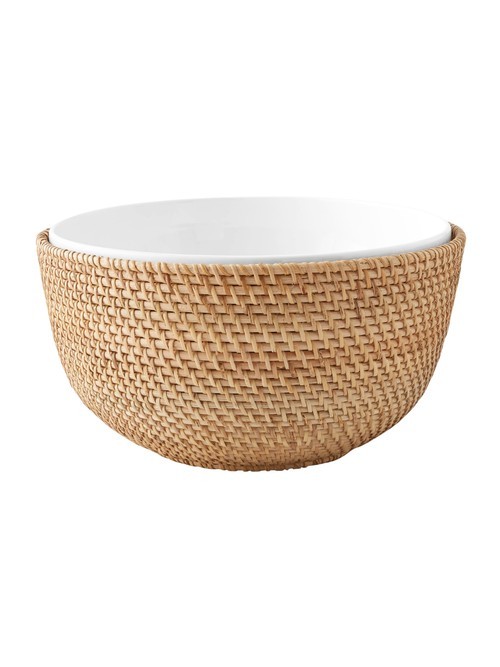
The source moves rattan beyond baskets and lampshades into serving bowls, utensil holders, and handled table accessories. These details bring a woven surface close to the dishes and linens used during a meal. This makes texture part of the table's ordinary functions rather than an additional centerpiece that occupies useful space. A small number of pieces can establish the material within the wider arrangement.
Vary the weave while keeping the palette connected
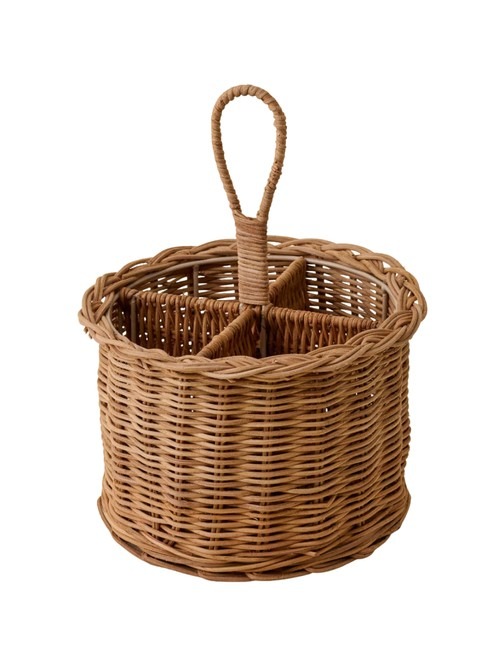
Tightly woven bowls and more loosely braided holders provide different levels of detail even when they share a natural tone. The reference highlights that variation as part of rattan's decorative appeal. Choose the accessories alongside existing plates, textiles, and glassware, allowing the woven elements to provide contrast. The aim is a relaxed summer table with more depth, rather than making every object from the same material or buying an entirely coordinated collection.
Choose the weave for the role it will perform
The feature distinguishes tighter woven bowls from looser utensil holders and also includes wrapped handles and small tabletop accessories. These differences affect both the visual texture and the way an object is handled. One woven piece can contrast with smooth ceramics or glass, while a whole table of closely similar weaves may make individual forms less visible.
Check care and food contact separately from appearance
Rattan wrapping or a woven outer layer does not establish that a product is dishwasher-safe, suitable for soaking, or intended for direct contact with every food. Consult the current maker's instructions for each item, especially pieces with several materials. The source is a shopping edit rather than a comparative durability test. Select a useful serving bowl, holder, or placemat first, then compare it with the existing linen and dishes. Repeating one natural tone in a different texture can create continuity without replacing all the everyday tableware or treating a seasonal trend as a complete purchasing list.
Use a woven accent to clarify a smoother neighboring surface
Rattan is visually useful beside the ceramics, glass and linen that already appear on many tables. Its texture can make those differences easier to notice. Begin with one functional object and compare it with the surrounding materials rather than replacing every item with another woven version from the shopping edit.
The source distinguishes tightly woven forms from more open braiding. Those variations can introduce detail within a related natural tone, but the actual size and shape should still suit the task. A utensil holder, charger or serving accessory occupies a different amount of table space. Choose which role needs the texture before selecting the object.
Read wrapped and mixed-material products individually
A rattan-wrapped handle does not have the same construction as an entirely woven bowl. The article groups them through a common material appearance, not through one identical set of care instructions. Check how the woven layer joins the other components and follow the maker's guidance for washing, drying and storage.
Food-contact suitability also needs to be confirmed for the exact product. A decorative basket-like exterior may surround another serving material, while a woven centerpiece may be intended only for display. Do not infer direct food use from a lifestyle photograph alone. That distinction lets the table retain both the desired texture and equipment appropriate to the meal.
Keep the seasonal interpretation selective and reusable
The shopping feature presents rattan as a summer direction, but that does not require buying a coordinated collection for one event. Relate a selected natural tone to existing timber, linen or older serving pieces. A smaller repeated detail can connect the table while leaving the dishes and food visually prominent.
Compare current product dimensions and availability rather than assuming the entire edit remains unchanged. Plan where the items will be kept after use, especially larger trays or tiered forms. The strongest adaptation is a useful piece that can return for later gatherings, with its woven surface providing contrast. Seasonal styling then comes from the way it is combined with other belongings rather than from a need to replace the tableware each year.
References
Serving accessories and small tabletop pieces can introduce a natural surface without changing the entire setting.


Leave a Comment
Comments (0)