Make a Christmas Wreath with a Clear Natural Foundation
Choose the base before collecting decorations
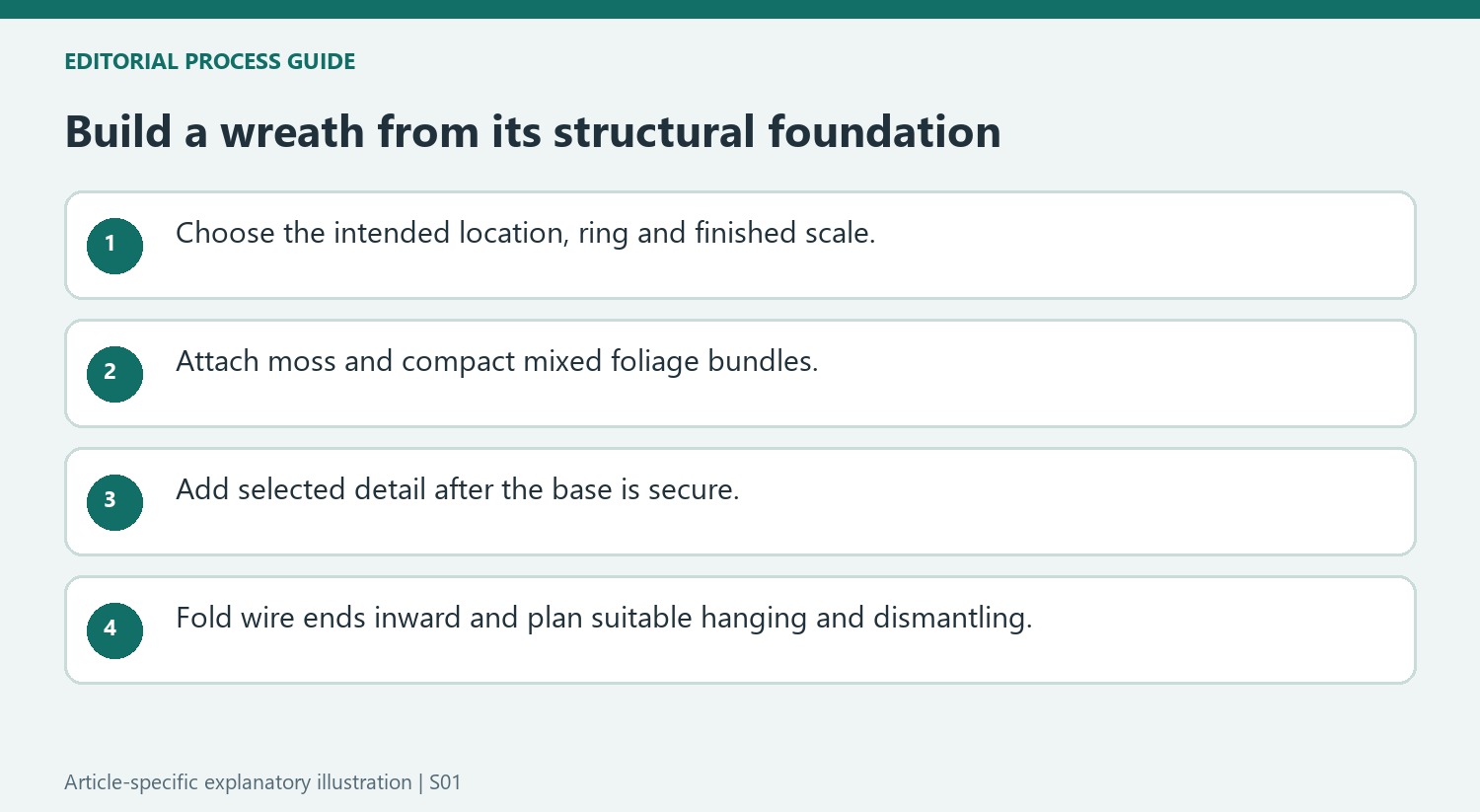
The source recommends beginning a handmade wreath with a strong ring, such as metal or a suitable natural material. Willow or rattan provides a different option when a compostable foundation is preferred. Moss is then secured to the base with twine before the foliage is added. This sequence gives the arrangement structure, helping the decorative materials form one wreath rather than a loose collection of branches.
Create variety within a related palette
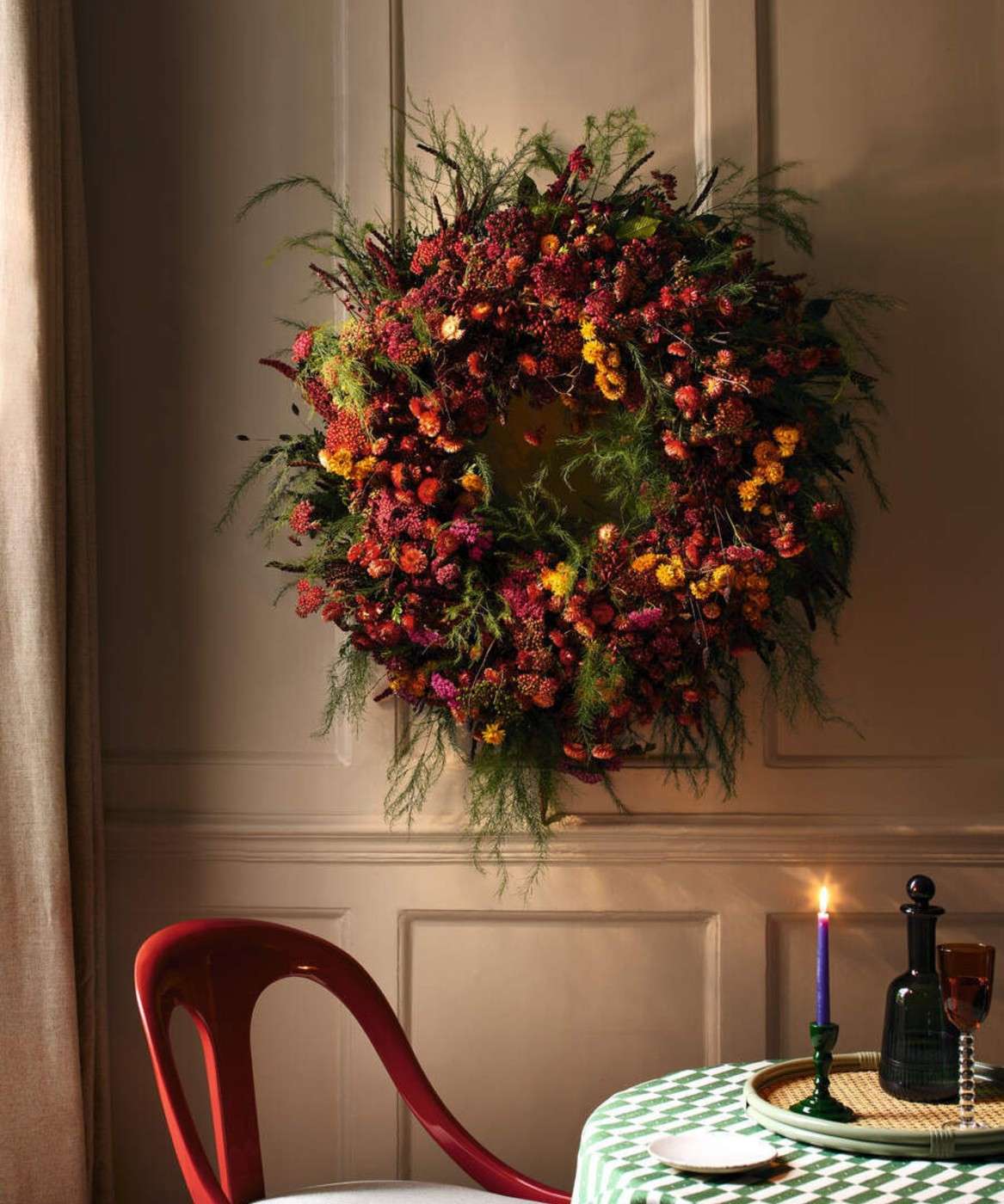
Spruce, conifer, pine, and berried ivy are suggested for differences in texture within the main green color. Pinecones, dried fruit, and flowers can provide the finishing details. The broader Christmas craft guide also includes garlands, table arrangements, and wrapping, showing how a few materials can support several projects. Choose a manageable idea and build it carefully, allowing handmade texture to provide character without requiring a large budget or an entire new collection of purchased ornaments.
Choose a suitable base before adding the foliage
Rachel Bull describes metal rings and natural willow or rattan as possible wreath foundations. Moss can be attached with jute twine before compact bundles of mixed greenery are added around the ring. The source suggests lengths of about eight to ten inches, with smaller bundles helping cover the inner and outer edges. Work around the entire form so the foundation is supported and the coverage remains even.
Finish the decoration and consider later dismantling
Pinecones, dried fruit, flowers, and ribbon can provide the final seasonal details. Wire ends need to be folded back so they do not protrude or scratch the hanging surface. The reference also mentions compostability, but that depends on removing wire, glue, ribbon, artificial pieces, and other unsuitable additions; a natural ring alone does not make the whole finished wreath compostable. Choose a secure hanging method appropriate to the door and wreath weight. Retaining the useful ring and reusable decorations separately makes the next seasonal arrangement easier to plan.
Set the wreath size through its base and foliage lengths
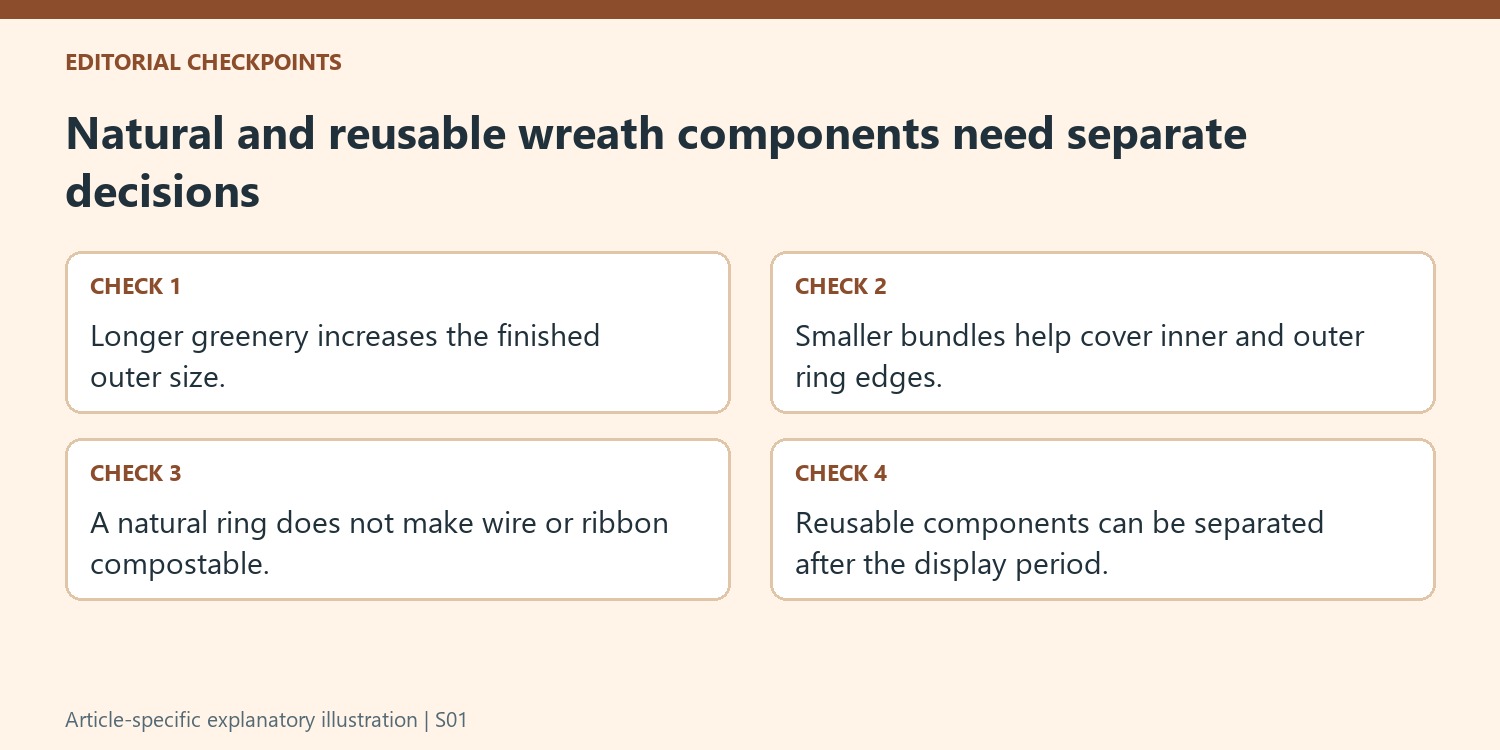
The source notes that longer foliage creates a larger finished form. Decide where the wreath will hang before cutting the greenery, then compare the ring and proposed outer dimensions with that space. This gives the craft a practical boundary and helps prevent an attractive arrangement from interfering with door hardware or nearby access.
Prepare the mixed foliage in manageable groups rather than attaching a random loose branch at a time. The suggested compact bundles allow the ring to be covered progressively. Smaller groups along the inner and outer edges help preserve a clear circular outline, keeping the foundation concealed without making every section unnecessarily thick or heavy.
Add decorative detail after the structural work is secure
Pinecones, dried fruit and ribbon should finish an already coherent wreath rather than compensate for an unstable base. Compare their positions before fastening them, looking for a distribution that allows the different green textures to remain visible. A limited palette can provide variation without requiring an ornament in every gap.
The source describes attaching finishing objects with floristry wire and folding excess ends inward. Check the back of the finished piece as carefully as the front, ensuring that sharp ends do not protrude toward the hanging surface. Select a hanging method suitable for the actual weight and location instead of assuming a small hook will support every version of the project.
Plan the end of the display as part of making it
The discussion of natural foundations makes later dismantling important. A willow or rattan ring does not automatically make wire, glue, ribbon or artificial embellishments compostable. Separate the materials according to their actual composition and local disposal requirements, retaining reusable components where practical.
The wider craft feature also offers garlands and tabletop ideas, but a manageable single project may be enough for a first attempt. Check fresh material during the display period and place it appropriately away from heat. The benefit of the handmade method is control over size, palette and selected detail. Careful construction and considered reuse give that personal appearance a practical foundation beyond the initial afternoon of crafting.
References
- DIY Christmas Decor Ideas You'll Actually Want to Try. Homes and Gardens; Martha Davies.
A sturdy base, varied evergreen foliage, and a limited group of seasonal details create a useful starting point for holiday crafts.


Leave a Comment
Comments (0)