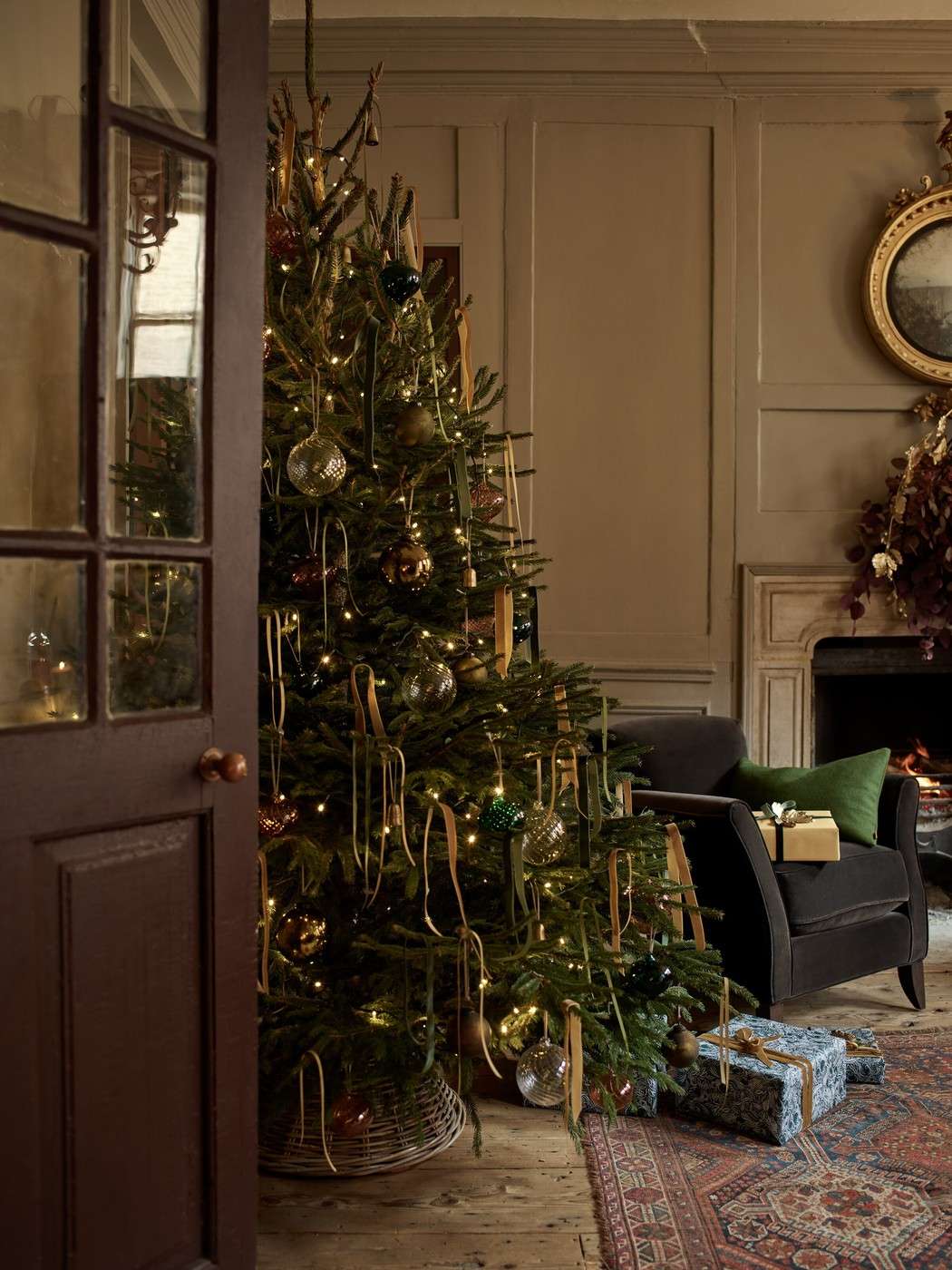
Make Holiday Decorations Feel Richer through Texture and Ribbon
Mix related materials within a clear color direction
The designers in the reference recommend a combination of older and newer decorations with different textures. Glass ornaments, silk-thread baubles, velvet, and other tactile details can sit within a related palette without becoming a uniform set. This gives the display depth while preserving a sense of order. A richer appearance comes from the relationship among objects rather than simply adding more of them.
Refresh familiar ornaments with small changes
Ribbon offers several modest ways to alter an existing display. It can replace thin hanging string on baubles, form a bow on a wreath, or introduce color among tree branches. Dried flowers and bare stems provide another source of texture alongside evergreen foliage. Choose the additions for what they contribute to the overall arrangement, allowing a limited number of considered details to make the holiday display feel more individual and complete.
Build texture without losing a recognizable palette
Rebecca Udall discusses mixing glass, hand-blown pieces, and silk-thread ornaments, while Kathy Kuo favors contrasts such as velvet, crystal, and softer throws. The shared idea is variety of surface within a considered group of colors. Look at the ornaments already owned before adding another finish, and allow a few meaningful older pieces to remain part of the display.
Use ribbon and lighting to connect the existing pieces
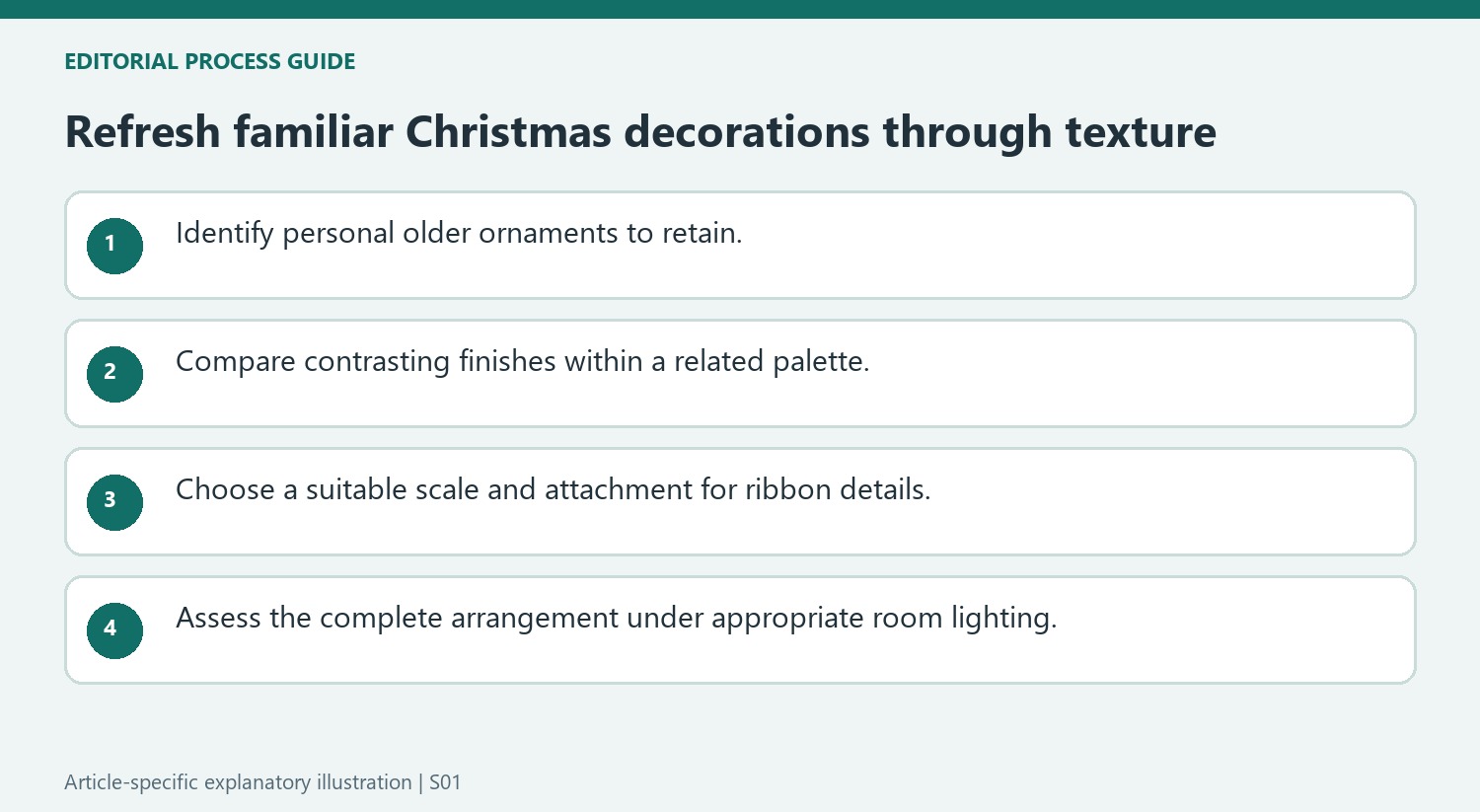
Ali Childs suggests replacing thin ornament strings with thicker ribbon or making statement bows. Caroline Kent also uses ribbon as a repeated tree detail. These are small changes that can connect otherwise different ornaments without purchasing a new set. The source pairs such ideas with dried flowers, foliage, and gentler ambient lighting. Keep dried material and textiles away from flames or heat, and select lighting that suits the intended position. An edited arrangement can feel richer through texture and personal associations, but an impression of luxury is subjective and does not require a higher spending target.
Start with the ornaments that already carry meaning
The source values a mixture of older and newer pieces rather than a completely uniform replacement set. Identify which existing ornaments have personal significance or a distinctive surface. Their colors and scale can guide the next addition, so the display feels accumulated through the household's own history rather than copied from one shopping collection.
A restrained palette can connect those differences without requiring every object to match. Glass, silk thread and velvet respond differently to light and touch. Compare the actual pieces together before adding another material, allowing one contrasting finish to improve the relationship instead of increasing variety only for its own sake.
Use ribbon as a connecting detail with an appropriate role
Replacing thin ornament strings with a more substantial ribbon changes a small but repeated part of the tree. A larger bow makes a stronger statement. Decide which scale is needed and check the attachment and weight of the actual ornament before changing the hanging method.
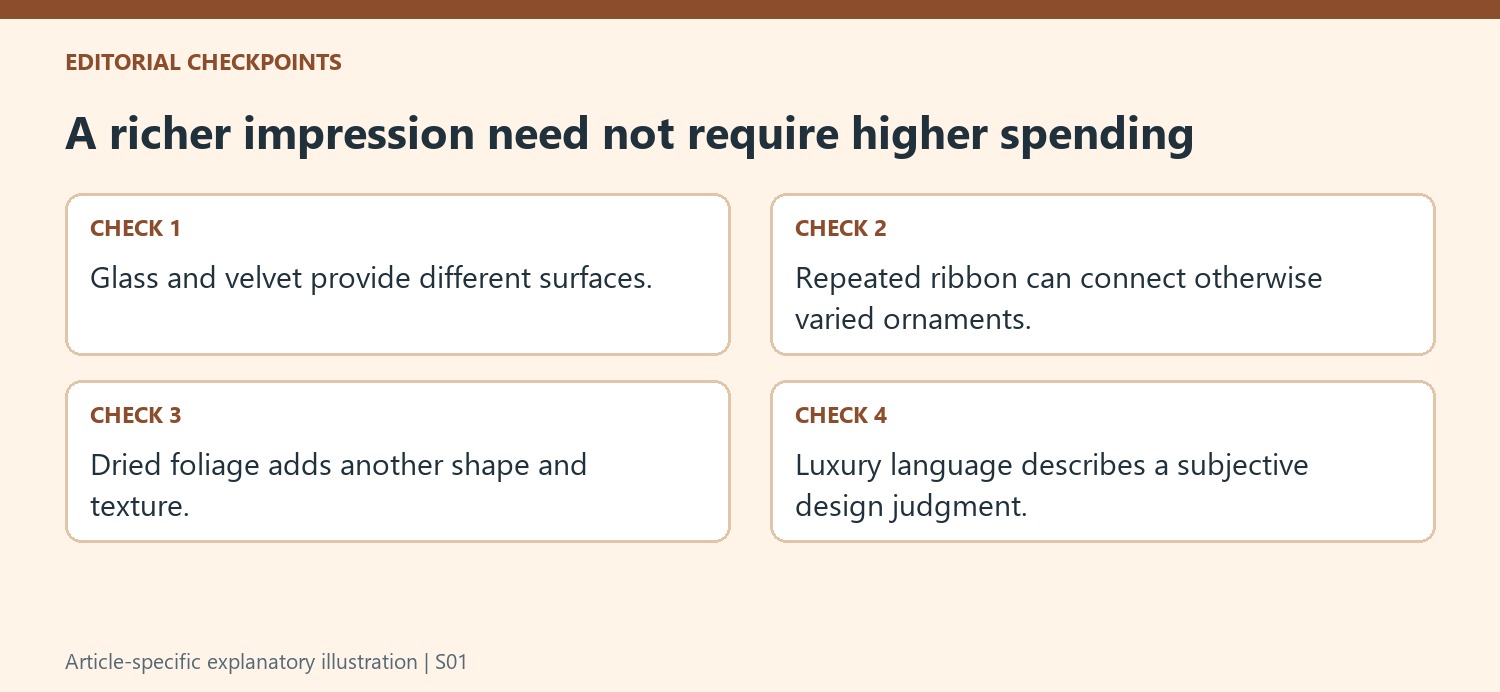
The source also proposes bows on wreaths and repeated ribbon among branches. These are possible alternatives within one idea, not a requirement to add fabric everywhere. Keep ribbon and dried material clear of flame and unsuitable heat, and verify the intended placement of any outdoor version. Their decorative usefulness does not remove ordinary material and lighting requirements.
Judge a richer impression through the whole arrangement
Dried flowers, bare branches and gentler ambient lighting can change the depth of a display without raising the spending target. Compare the result from the room's normal seating and entrance views. A few clearer contrasts may be more effective than a larger number of similar objects crowding one surface.
The article uses expensive-looking and luxury language as subjective design judgments. They should not become guarantees about how every observer will respond or instructions to buy costly materials. Choose details that suit the actual home and remain enjoyable throughout the season. A personal ornament, related ribbon and appropriate lighting can form a considered group, with the sense of richness coming from readable relationships rather than a particular price or brand.
References
- 7 designer-approved ways to make your Christmas decor look more expensive. Homes and Gardens; Emily Moorman; Hebe Hatton.
A more considered display can come from curating existing pieces rather than increasing the decorating budget.


Leave a Comment
Comments (0)