Create a Comfortable Nook for a Scandinavian-Inspired Pause
Design around the activity of taking a break
The reference draws on the Swedish custom of fika to consider spaces for coffee, conversation, and a slower moment. A reading chair, window seat, or breakfast nook can serve this role when it is designed for actual comfort. The arrangement does not have to occupy a separate room. Its purpose is to make a small pause feel natural within the home rather than creating an attractive corner that is awkward to use.
Check how the furniture works together
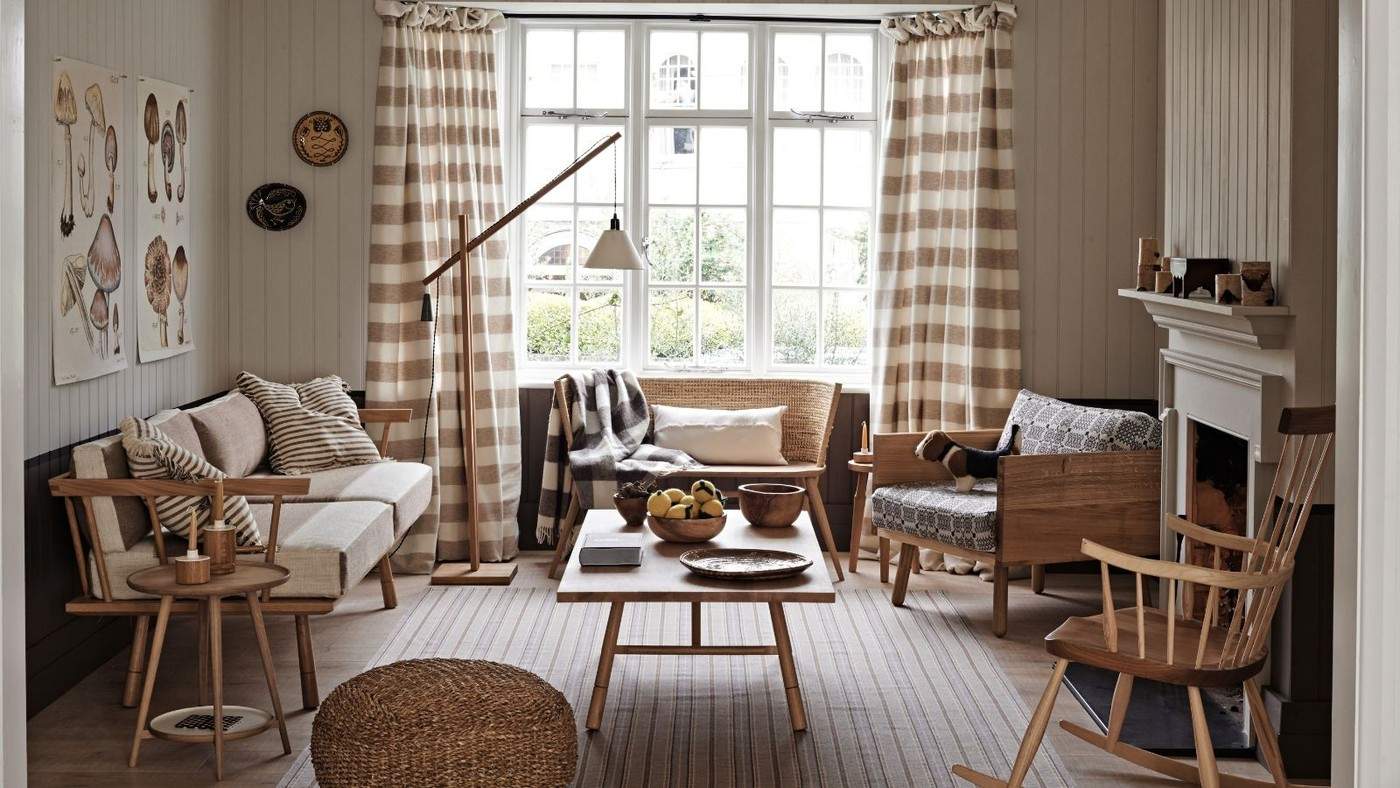
Comfortable seating and an appropriately proportioned side table are central to the designers' advice. A chair that is too high for its table undermines the experience, regardless of the styling. Natural light or a pleasant view can strengthen the invitation to linger, while soft textures add warmth. Consider how a pair of chairs faces one another and where a cup can be placed, letting practical relationships establish the atmosphere.
Check the relationship between seat and table
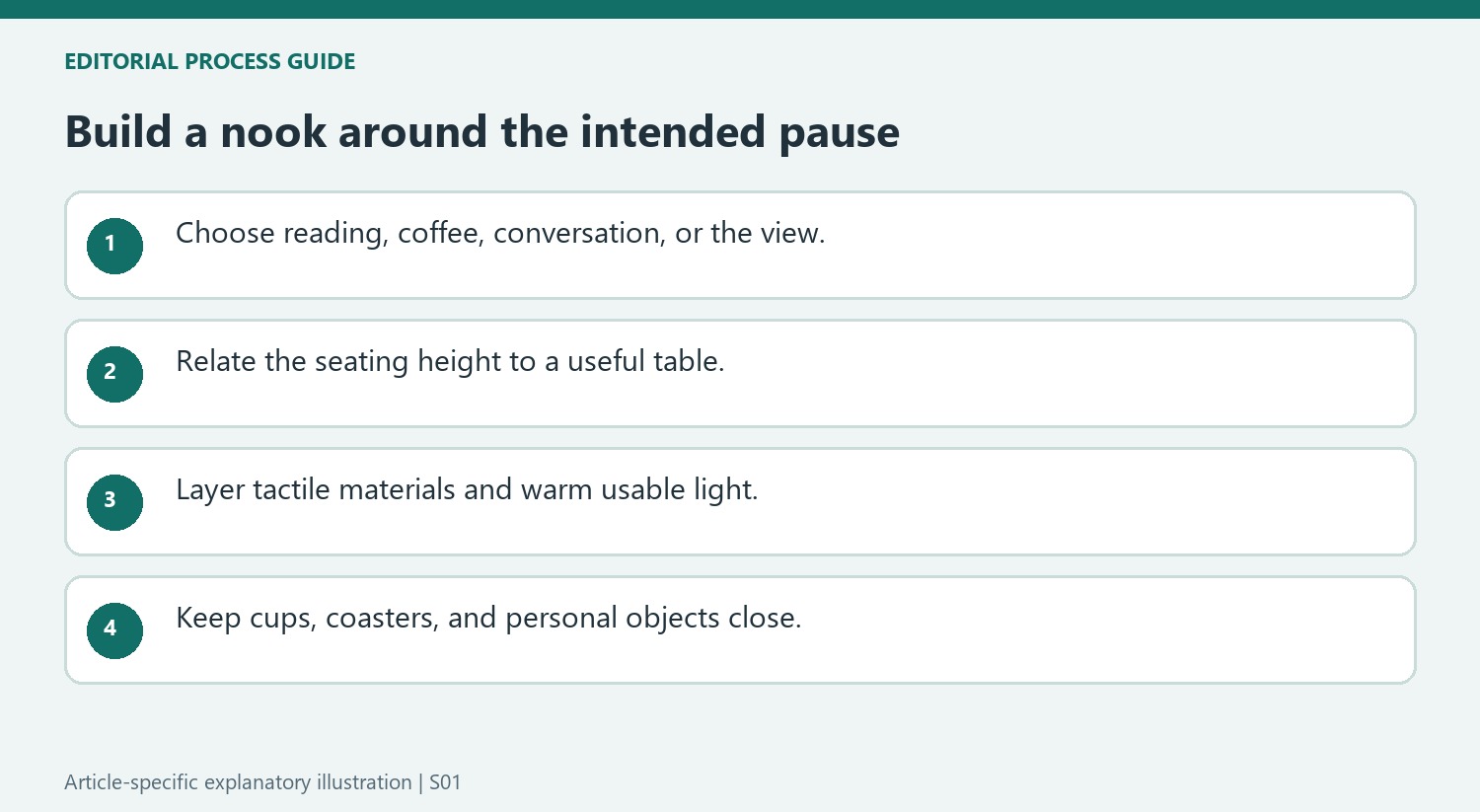
Kashi Shikunova stresses that a comfortable pause is difficult when the chair and table are poorly proportioned. Test the actual sitting position and reach before deciding that an attractive corner is ready to use. Joanna Laven suggests a view or natural light, a small table, and seating arranged for lingering or conversation where space permits. A nook can therefore be built around an existing comfortable chair rather than requiring a full new room.
Use familiar materials to support the routine
Wool, warm wood, ceramics, and softer textiles provide different tactile surfaces without making the setting complicated. The article also discusses an accessible place to prepare or serve coffee. Keep the practical route between that station and the seat clear, and choose a stable surface for drinks. Fika is presented as a social and cultural pause; a decorated corner supports the activity but does not substitute for actually making time to stop and enjoy it.
Let the intended pause determine the furniture
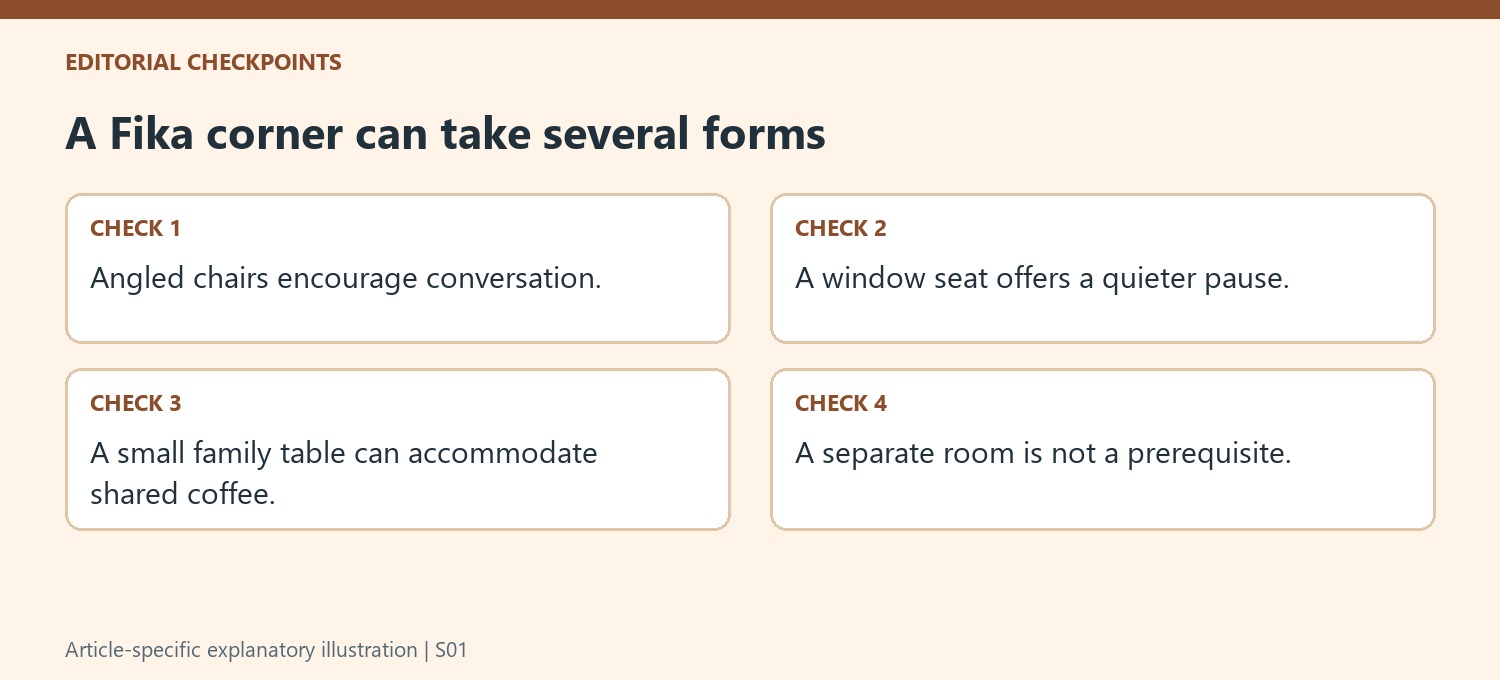
A nook becomes convincing when its furniture supports the break someone actually wants to take. The designers discussing Fika describe coffee, conversation, reading, and looking out of a window as related but different activities. A pair of lounge chairs angled toward each other serves a social pause; a comfortable window seat can suit a quieter one. Seating and table heights deserve attention together, because an awkward reach or mismatched surface interrupts the ease the corner is intended to provide. This approach also avoids treating a separate room as a prerequisite. A small dining table, an existing bench, or a useful corner can host the ritual when the arrangement encourages people to settle rather than immediately move on.
Use texture and light to define a welcoming corner
Softness in the examples comes from several materials rather than one mandatory purchase. Wool, a rug, cushions, warm wood, and ceramics give the setting tactile variety, while a throw can make an existing seat more inviting. A rug can also establish the nook within a larger room without adding a physical partition. Lighting should reinforce the way the place will be occupied: a pendant over a breakfast table creates a different relationship from a lamp beside a reading seat. The designers favor warm, layered light and adjustable options. Their advice is about a comfortable atmosphere and usable arrangement, not a requirement that every nook contain an identical collection of decorative objects.
Keep everyday provisions and personal objects close
The coffee element of Fika can be supported by something as straightforward as keeping a pot or thermos nearby. One contributor describes a small family table with chairs, a cushioned bench, and easy refills, showing how hospitality can remain informal. Accessible coasters and napkins help the setting work without repeated trips elsewhere. Books, greenery, a favorite cup, or an inherited textile can supply the lived-in character emphasized by the designers. These details need not match perfectly to belong together. The useful test is whether the corner makes an unhurried pause easier for its occupants. Adding accessories without protecting time to sit would miss the relationship between the space and the custom that inspired it.
References
- I’m Calling It: This Swedish Tradition Is the Secret to a Cozier Home, and It’s All About Creating the Perfect Nook for Mindful Moments. Homes and Gardens; Eleanor Richardson.
Well-proportioned seating, a useful table, and a welcoming position matter more than adding another decorative corner.


Leave a Comment
Comments (0)