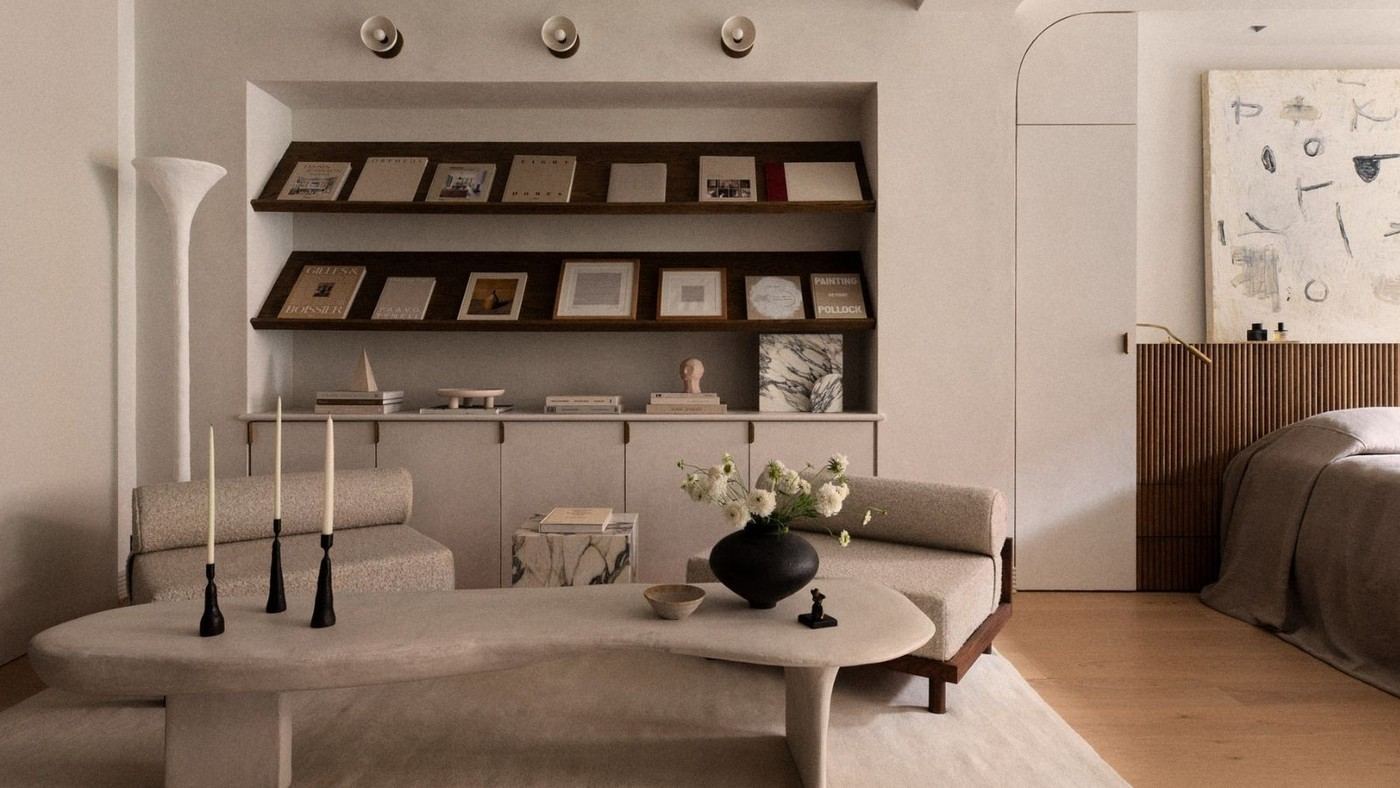
Minimalism Can Retain Texture and Personal Character
The minimalist ideas in this reference depend on more than removing possessions. Layered textures, natural stone or wood, and subtle patterns bring depth to a limited palette. Softer contours can balance crisp lines, while warmer whites help avoid an unnecessarily stark background.
Select objects that matter to the household and allow space to display them clearly. Handcrafted surfaces can contribute variation without increasing the number of furnishings. The approach asks each material and object to earn its place while preserving enough comfort for the room to feel lived in.
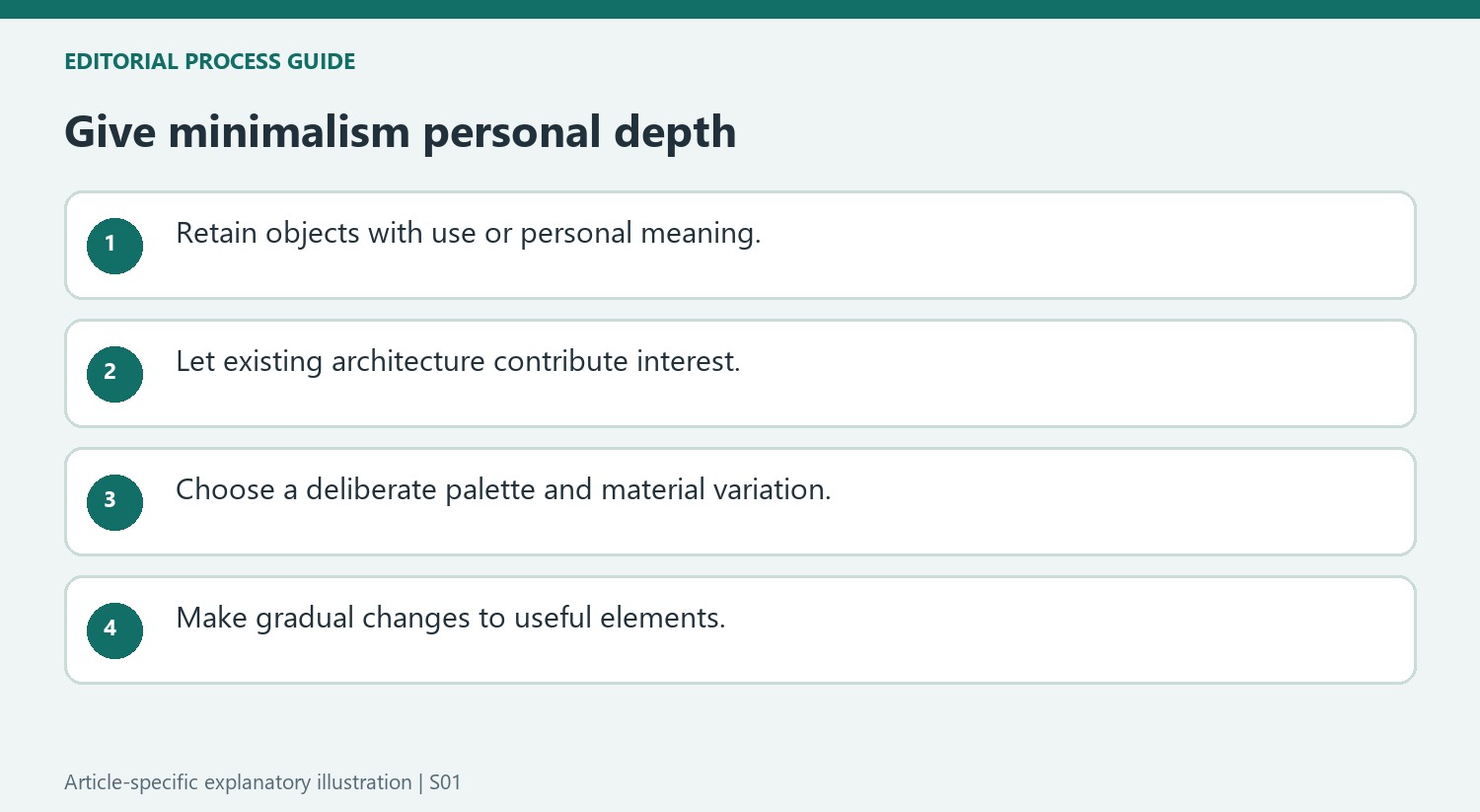
Select meaningful objects rather than eliminating personality
Kashi Shikunova's advice favors cherished pieces shown clearly instead of incidental objects accumulated without a role. A useful edit begins by deciding which item deserves attention, then giving it a more legible setting. A family ceramic, book, or handcrafted object can remain within a minimal scheme when its position and scale are deliberate. A selected object can sit alone or beside related books without filling every available shelf. Leaving surrounding space available helps it read as a choice rather than as leftover clutter.
Use warm undertones and contrasting surfaces for depth
The source discusses nuanced whites with a slight green, blue, pink, or earthy influence, alongside stone, wood, and layered textiles. Kendra Nash's example keeps the colors restrained while using subtle pattern and architectural furniture shapes. Compare soft contours with clearer lines and matte surfaces with more tactile ones. The aim is a room whose limited elements still offer variation. Choosing fewer objects does not require choosing only smooth white materials or removing the useful belongings that make daily life comfortable.
Curate relationships rather than removing all character
The minimalist examples in the source are edited, but they do not exclude meaningful possessions. Designers describe selecting cherished items and presenting them with enough space to be appreciated. A favorite vase or a small group of books can therefore have a clear role without requiring every surface to be filled. This is different from treating emptiness as the only measure of success. The number of objects matters less than the clarity of the arrangement and the value those objects bring to its occupants. Furniture also needs to earn its place through use, proportion, or a distinctive silhouette. A room can remain simple while expressing the history and preferences of the person who spends time in it.
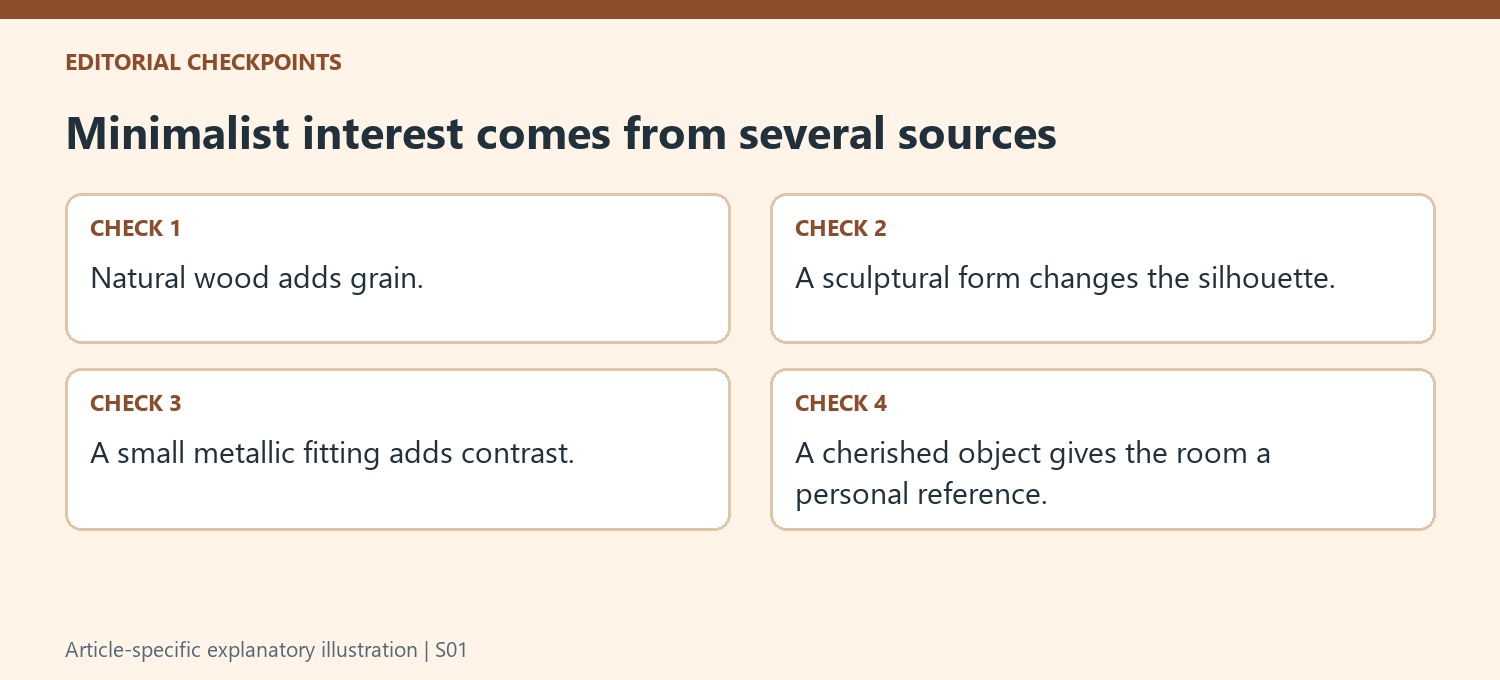
Build material depth into a limited composition
When colors and furniture quantities are restrained, texture and workmanship become especially visible. The article highlights natural wood, stone, linen, matte ceramics, and other tactile surfaces as ways to prevent a room from feeling flat. It also describes softer contours alongside cleaner lines, and modest metallic details that add variation without taking over. These are several possible tools rather than a shopping list to complete. Existing architectural features may already contribute much of the needed interest: original woodwork, windows, tile, or molding can give a pared-back scheme depth. Looking at those qualities first helps avoid adding decoration merely because a simple room is assumed to be unfinished.
Choose a palette for the particular setting
The source does not restrict minimalism to pure white. It describes nuanced whites and warm neutrals, but also a deeper interior using sage, dark tones, and a material connection to a courtyard. That variety shows how a clear composition can survive changes in color intensity. A muted undertone may soften a sparse room, while a more saturated wall can establish a deliberate atmosphere without adding furniture. The relevant question is how the chosen surfaces relate to daylight, architecture, and the pieces retained. The designers' emphasis on quality also supports a gradual approach. Keeping the room connected to its architecture is another form of restraint. One thoughtful change to a useful element can have more value than a rapid purchase of many objects intended to make the room look minimal.
References
- 10 minimalist decor ideas – learn how to embrace minimalism while still having a home filled with character. Homes and Gardens; Hebe Hatton; Eleanor Richardson.
Soft hues and carefully displayed objects keep a restrained interior welcoming.


Leave a Comment
Comments (0)