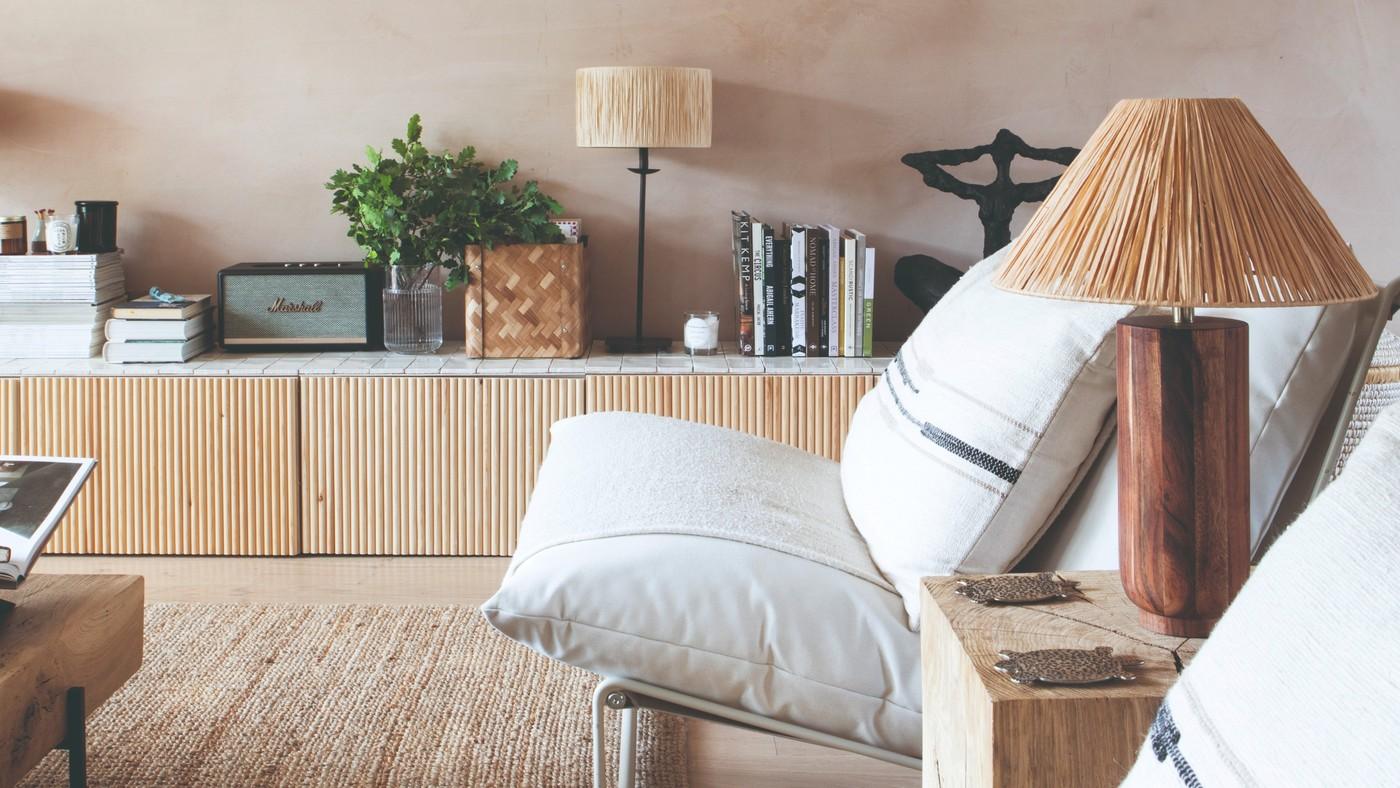
Give Japandi Living Rooms Warmth through Earthy Tones
Keep the shared principles in view
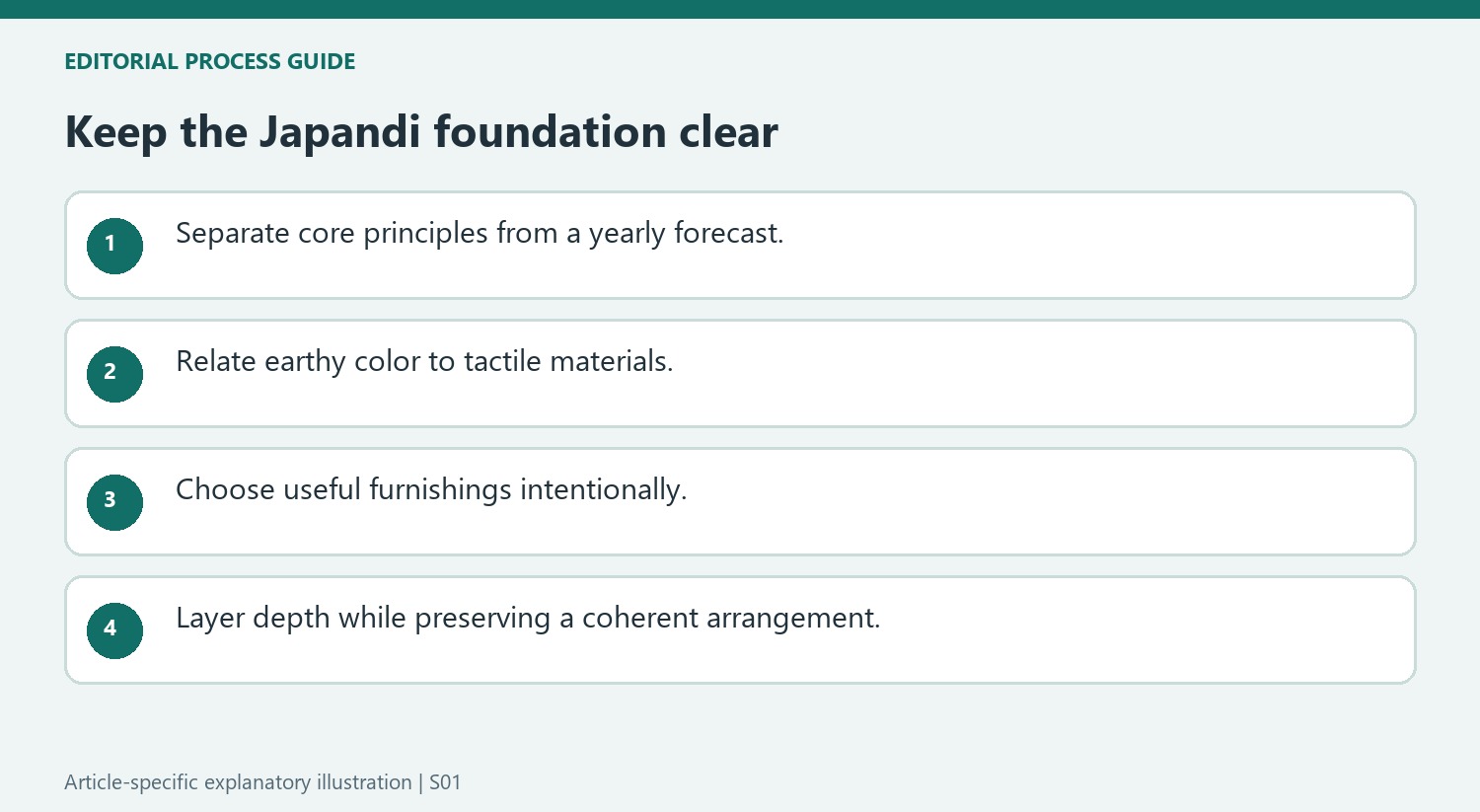
The reference describes Japandi as a meeting of Japanese restraint and Scandinavian comfort. Simplicity, useful furniture, natural materials, and craftsmanship form the common ground. These principles matter more than reproducing a single photographed room. A living space can remain uncluttered while still feeling warm when the larger pieces and materials have been chosen for both their appearance and their everyday purpose.
Use deeper neutrals without losing the quiet palette
The designers discuss softer brown tones alongside oat, stone, and beige as a way to make the style more enveloping. Charcoal and other darker details can provide contrast, while natural textures remain visible against the subdued background. Consider the balance among color, material, and empty space rather than adding accessories automatically. This allows the room to gain depth while preserving the restrained character that connects its Japanese and Scandinavian influences.
Understand brown as an addition to the established palette
Shelley Cochrane describes warmer brown joining oat, stone, and beige in recent Japandi living rooms. The change adds depth without abandoning the cleaner outlines or functional furniture associated with the style. A smaller brown accent can be assessed alongside an existing neutral sofa before replacing a large piece. Look at the grain, weave, and undertone as well as the color name.
Keep the functional priorities visible as the palette evolves
Kelly Collins and Magdalena Gierasinska emphasize a shared appreciation of simplicity, natural materials, and craftsmanship. Richer textiles or additional color can develop within that framework when each object still has a clear purpose. Retain useful storage and comfortable seating rather than making them secondary to a trend label. The article's predictions describe one direction of taste, not a deadline for an existing scheme. Choose additions that improve the actual room and let material contrast provide depth without crowding the plan.
Distinguish the foundation from the year's forecast
The contributors describe Japandi through shared priorities: simplicity, natural materials, craftsmanship, and useful furnishings. Predictions about warmer brown tones or richer layering are presented as developments within that foundation. This distinction helps a homeowner decide what is worth borrowing. A living room does not need a new palette every time a trend story identifies a shift. If the arrangement already feels clear and comfortable, a smaller material or textile adjustment may be enough. The source's forecast for a particular year records expert expectations, not a guarantee that a style will suit every future room. The more durable criteria concern how thoughtfully the pieces are selected and whether the living room supports the people who occupy it.
Use earthy color to support texture
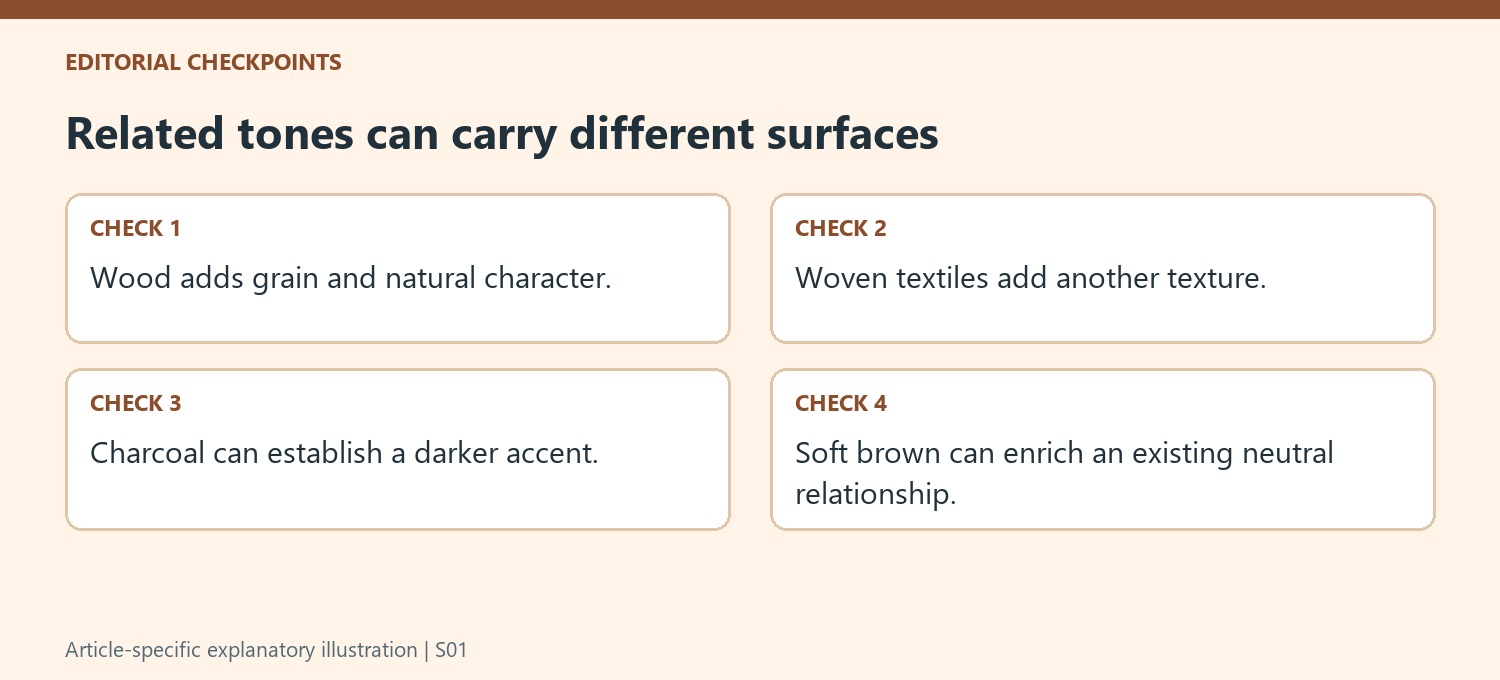
Oat, stone, beige, warm gray, clay-like white, and charcoal appear in the article's description of the palette. Softer browns expand that range without necessarily producing a busier room. These colors are intended to allow natural surfaces and tactile textiles to remain visible. Their effect therefore depends partly on the materials carrying them. A wooden table and a woven cushion can occupy related tones while giving the room different kinds of detail. More layering need not mean more objects on every surface. It can mean a richer relationship among a few existing elements. Looking at the room at this scale preserves the simplicity that distinguishes the approach while making its warmth more tangible.
Judge furnishings by their role in daily life
The experts emphasize that each piece should be useful as well as attractive. This is especially relevant to a living room, where a calm visual arrangement must still accommodate sitting, conversation, and ordinary household activity. A low profile or a softly curved edge can contribute to the look, but it does not make an unsuitable piece functional for a particular home. The source offers product examples as illustrations of the style rather than universal solutions. Reviewing scale, placement, and the relationship among furnishings gives those examples useful context. A considered arrangement can express the same principles through different objects, with warmth and depth emerging from material relationships instead of an obligation to reproduce a complete shopping edit.
References
- Will Japandi rule your living room in 2026? Interior experts weigh in. Ideal Home; Sara Hesikova.
Soft browns, natural textures, and considered craftsmanship can support a clean, functional interior.


Leave a Comment
Comments (0)