Refine a Traditional Home around Its Existing Craft
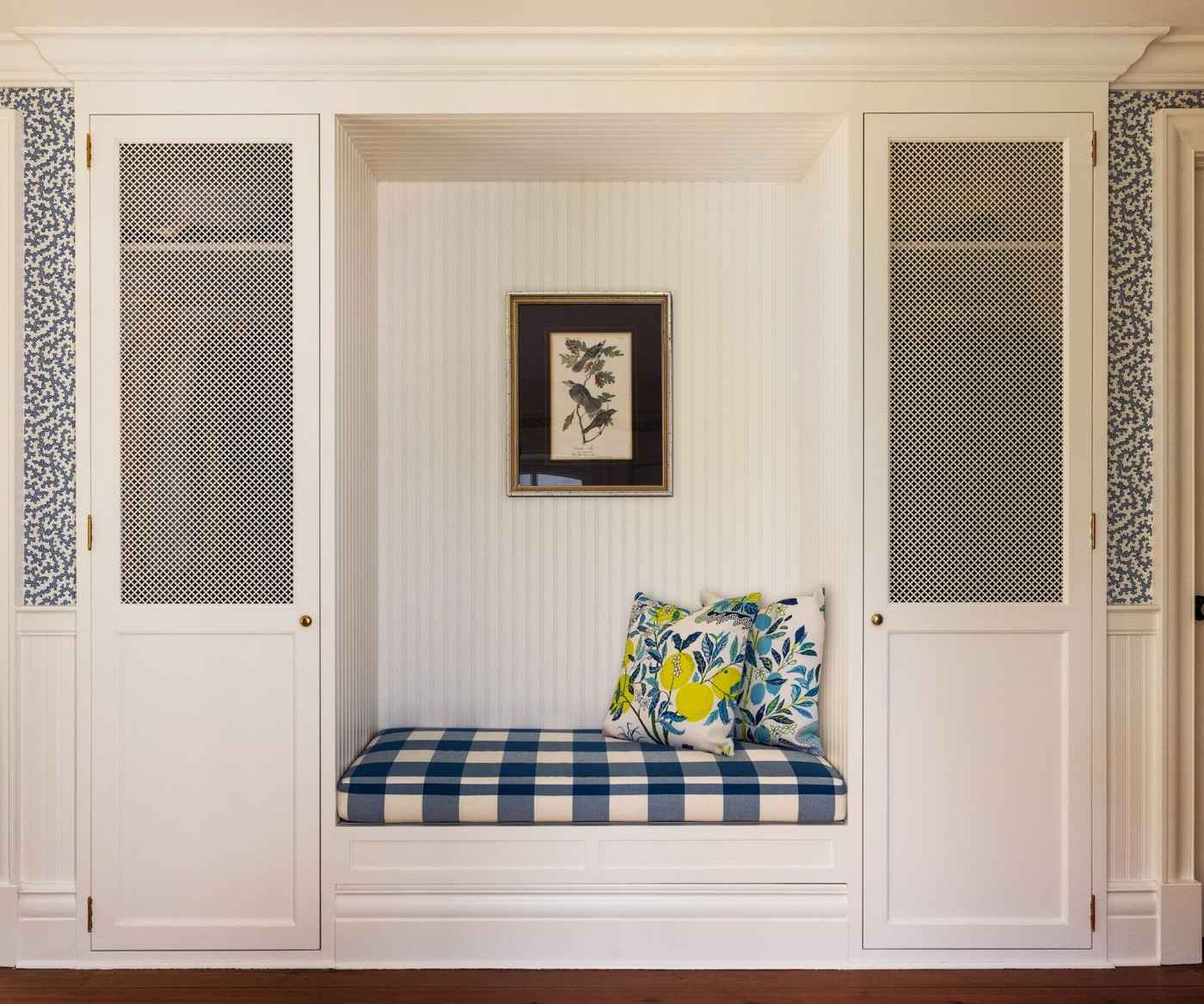
White Arrow's Bedford project retains a strong relationship with traditional architectural details. Wood paneling and older-style millwork inform the renovation, while updated bathrooms and a revised layout support the owners' current needs. Blue and white contribute to the welcoming entry.
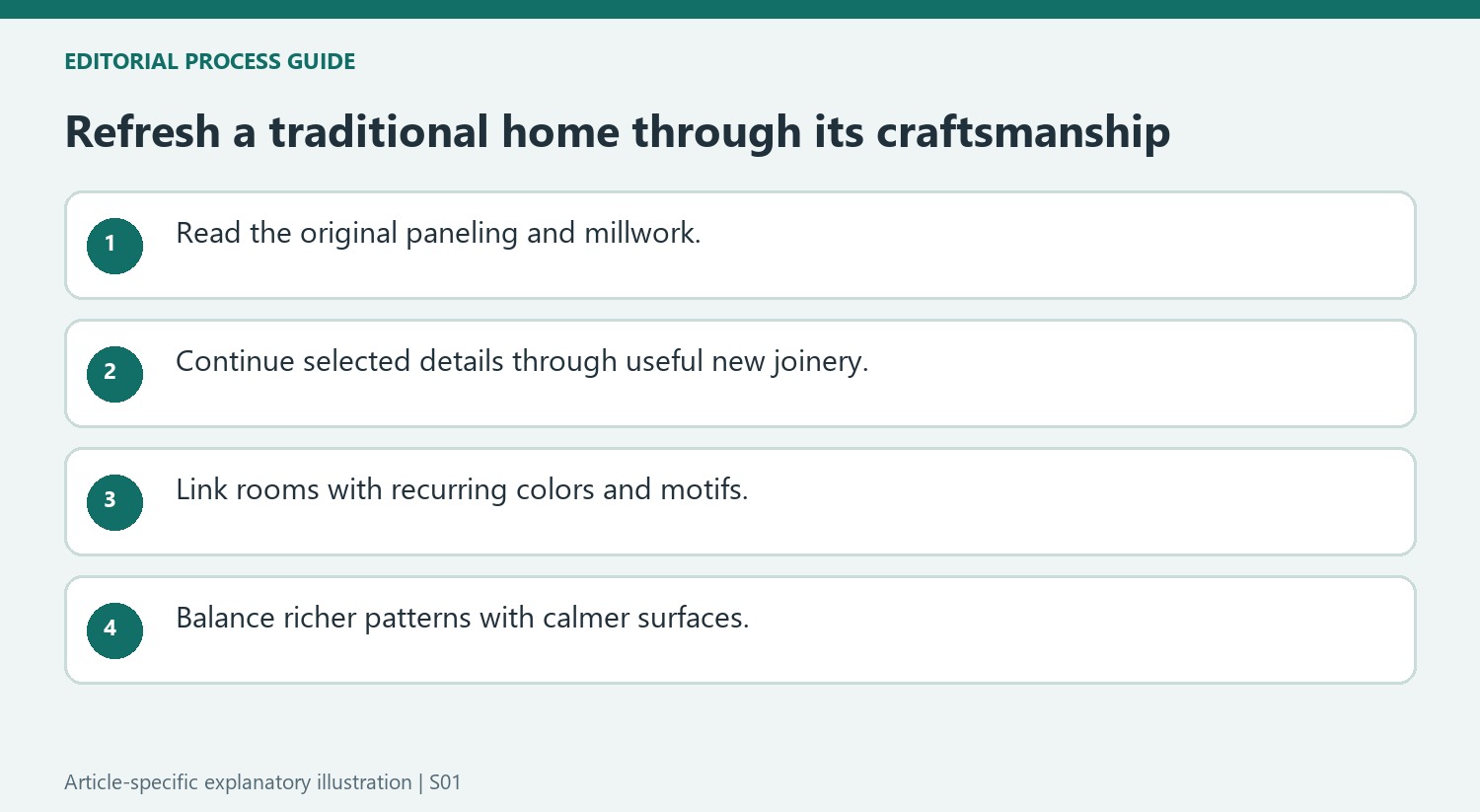
Consider the existing craftsmanship before choosing newer finishes. A traditional home can gain practical improvements without abandoning its character. The more successful additions build on those details, allowing current furniture and uses to coexist with the structure already present.
Use the original millwork to connect old and new
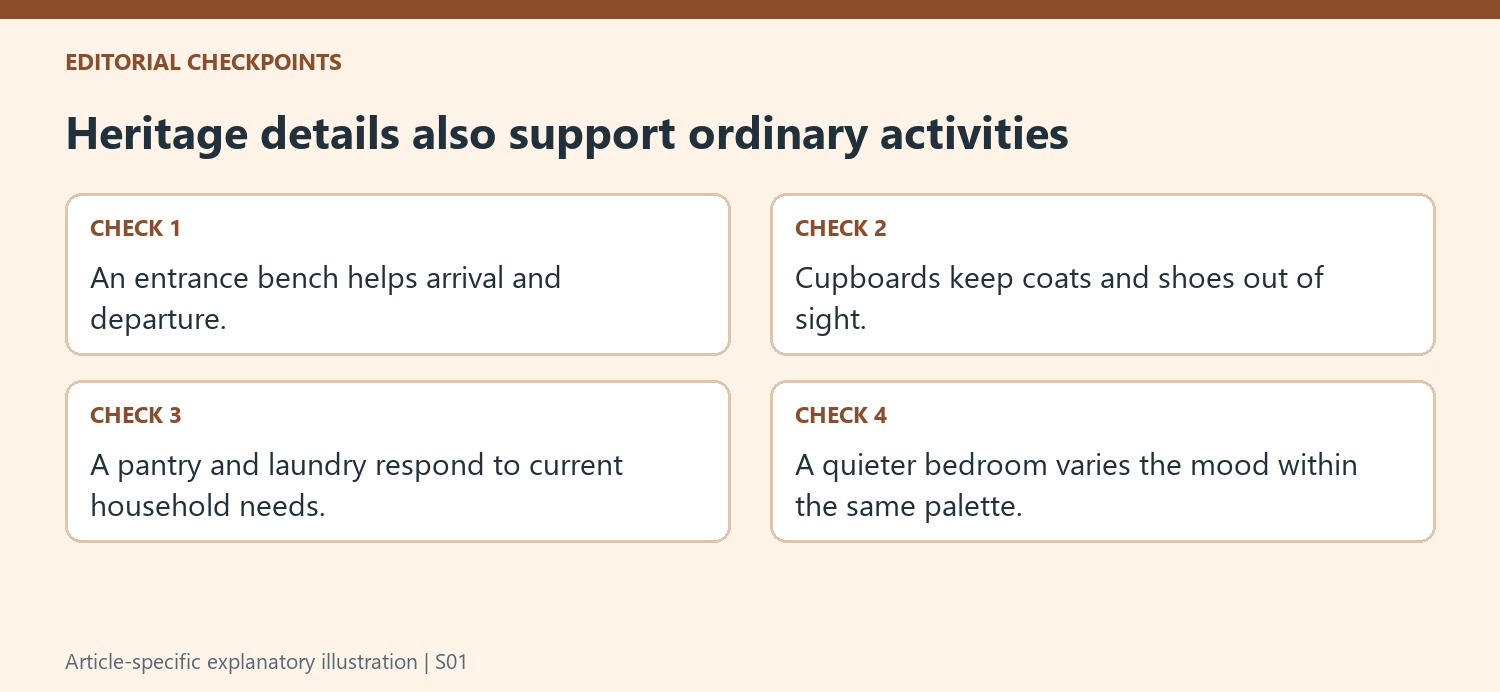
White Arrow's Keren and Thomas Richter describe refining the Colonial home's existing architectural detail while updating layout and bathrooms for the owners. The entry combines cream shiplap, a useful bench, coat storage, floral wallpaper, and smaller patterned accents. Those details acknowledge the house's character while giving arriving and departing visitors practical support. Retaining craftsmanship can therefore serve an everyday function rather than turning the interior into a preserved display.
Allow the pale kitchen to gain depth through materials
The source pairs cream cabinetry with original paneling, a marble island, ceramic sink, warmer hardware, and timber seating. A neighboring breakfast area uses a darker floor, an older-looking round table, and rattan chairs to provide contrast. The repeated millwork links the zones, while different textures keep them distinct. Compare the permanent finishes before selecting accessories, and let one stronger light or fabric provide the color accent where the underlying architecture already supplies detail. Its purple pendant gives the otherwise restrained breakfast setting a distinct focal point. The example's appeal depends on its existing house and brief, not on a universal formula that guarantees a home will never date.
Let existing craftsmanship guide the new work
White Arrow's approach begins with the Colonial house's millwork, paneling, and traditional character. New joinery and finishes are intended to connect with those features, making the updated rooms feel integrated rather than attached as a separate decorative layer. The designers also changed layouts and introduced useful spaces, including a pantry, laundry, dressing room, and home office. This demonstrates that honoring a building's character does not mean freezing its previous plan. The architectural detail provides a language for the alterations, while the owners' current needs establish what those alterations must accomplish. The relationship between old and new is therefore both practical and visual, with new craftsmanship continuing the existing context in a considered way.
Create continuity without giving every room one mood
Blue and white recur through the home, joined by botanical patterns, cream paneling, timber, and selected brass details. The palette appears in different proportions, allowing an entryway, a more formal dining room, and a snug living room to retain distinct characters. A darker room can sit within the same scheme when familiar materials and motifs link it to the lighter spaces. The source also describes an unexpected red accent and a low purple pendant, showing that continuity need not exclude smaller departures. Their success is explained by the surrounding framework. Recurring elements give the eye connections to follow, while individual rooms remain free to respond to scale, daylight, and their particular place in household life.
Balance heritage pattern with useful restraint
The project uses wallpaper, patterned textiles, vintage furniture, and contemporary pieces without making every surface equally intricate. Cream paneling and simpler areas provide relief beside the botanical and traditional motifs. In the entryway, a built-in bench and cupboards support arrival and departure as well as the room's welcoming appearance. In the bedroom, muted grasscloth and blue accents produce a quieter expression of the same layered approach. These examples make restraint an active design decision rather than the absence of personality. A homeowner borrowing the idea can look for which architectural or patterned feature deserves emphasis, then let other elements support it. Keeping usefulness visible helps a richly detailed room remain comfortable and approachable instead of becoming a display of period references alone.
References
- Step inside this characterful Upstate New York farmhouse reimagined for empty-nesters looking to design a home that never dates. Homes and Gardens; Eleanor Richardson.
Paneling and millwork guide an updated Bedford interior.


Leave a Comment
Comments (0)