Mid-Century Bedrooms Mix Wood with Clear Lines
Mid-century modern bedroom style combines clean lines, organic shapes, and practical furniture. The reference adds wood tones, structural lighting, and vintage finds to that foundation. Texture gives simpler forms greater depth without requiring ornate surface detail.
Consider the bed and headboard in relation to the room rather than selecting every piece for its period label. A selected vintage furnishing can sit beside newer items. The result should support current comfort while retaining the clarity associated with the style.
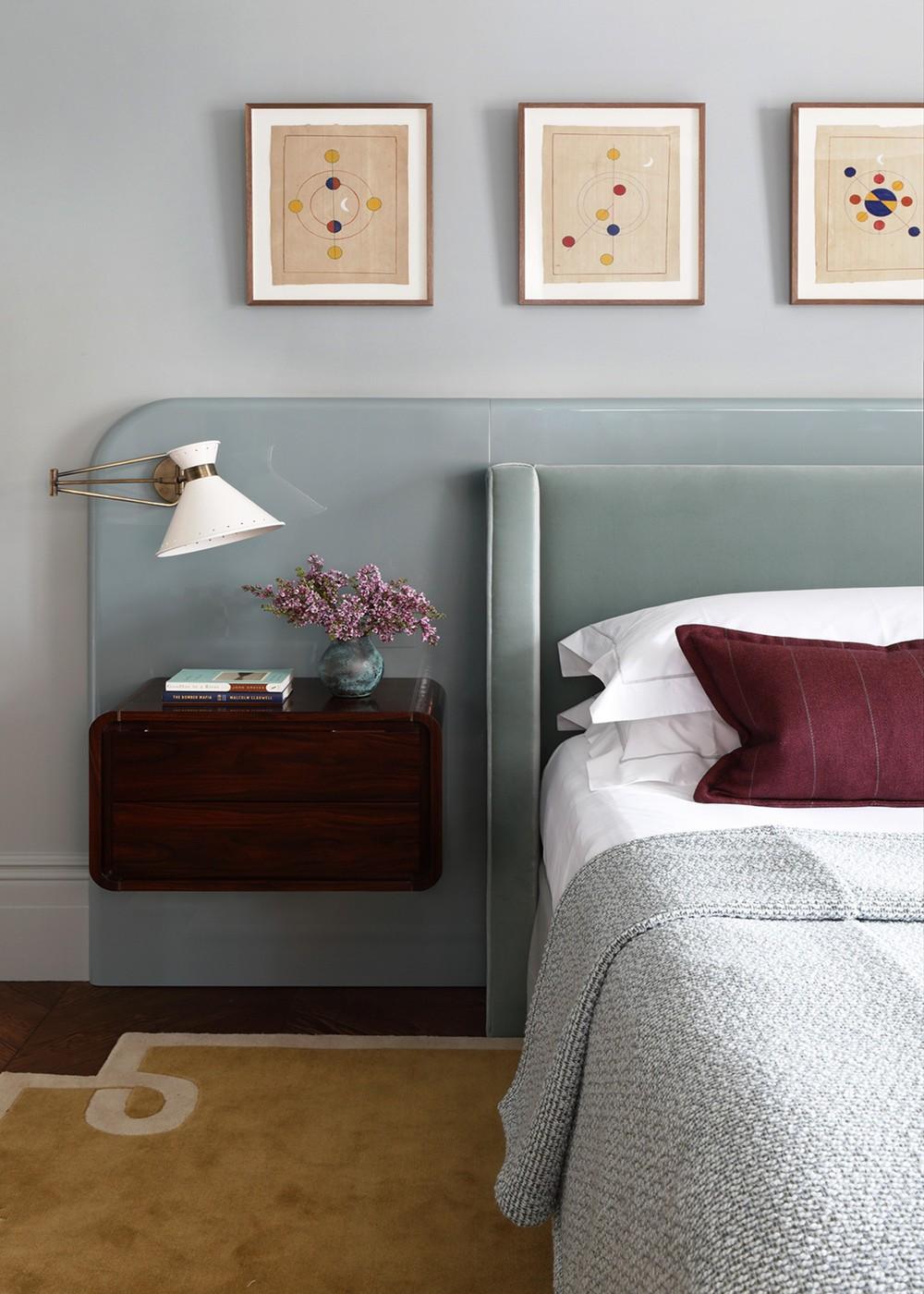
Use one strong headboard composition to organize the room
Christian Bense's example refers to Gio Ponti-inspired integration of nightstands and headboard. It combines pale blue velvet with a larger lacquered surround in a related hue, making material contrast part of the focal point. The glossy finish responds to light differently from the fabric, while surrounding art and a yellow rug add selected color. A smaller room can borrow that clear hierarchy without requiring a custom wall-sized structure.
Relate the wood to the other finishes
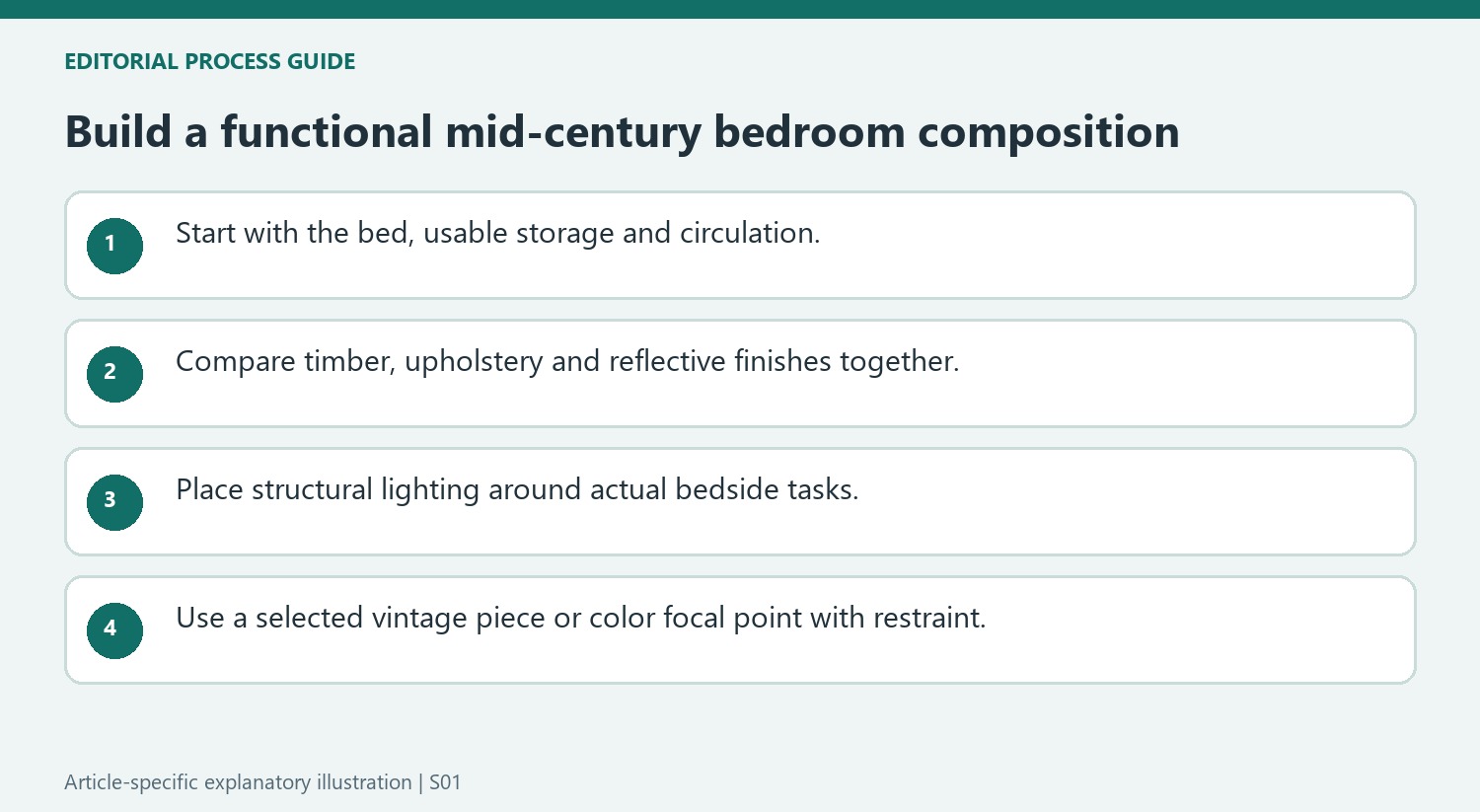
Ginger Curtis discusses walnut, teak, and oak as ways to introduce warmth and visible grain. Another example pairs simpler wood furniture with a mostly neutral palette and stronger individual accents. Compare timber with the upholstery, curtain fabric, and any metal details so the room has several distinguishable surfaces. The source's mid-century reference concerns function, organic forms, and clean lines as much as historical furniture. Holly Kopman also describes hardware-free timber storage, letting clean wooden surfaces balance orange, blue, black, or purple accents elsewhere. Choose pieces for usable storage, comfortable proportions, and condition rather than assuming tapered legs or a vintage label alone will produce a coherent bedroom.
Use structural lighting as a functional part of the composition
The source treats lighting as more than an accessory added after the furniture. Architectural floor lamps, globe sconces and similarly clear forms can introduce a sculptural element without competing with every other object in the bedroom. Consider the light needed beside the bed before selecting a fitting for its period associations or decorative outline alone.
Pablo Di Francesco's example uses simple bedside lamps rather than overhead lighting. That is one designer's choice for a particular project, not a requirement for every bedroom. The transferable idea is to relate each light to the way the room is occupied. A restrained fitting can support the clean lines of the furniture while retaining a distinct shape of its own.
Create depth through differences in finish and selected color
A largely neutral palette need not make all surfaces appear identical. The article contrasts softer fabrics with lacquer, metal, leather and visible timber grain. Compare samples together so that one finish does not disappear into another. The aim is a readable relationship between soft and reflective surfaces, rather than simply adding more materials because they are associated with the era.
Selected stronger colors can provide focus within that quieter foundation. The source describes orange, ochre and blue among several possible accents, including a prominent upholstered headboard. Choose where the strongest color belongs before repeating it across the room. A single clear focal point can retain the simplicity that gives the style its contemporary usefulness, even when individual furnishings are expressive.
Adapt vintage and built-in ideas to the actual room
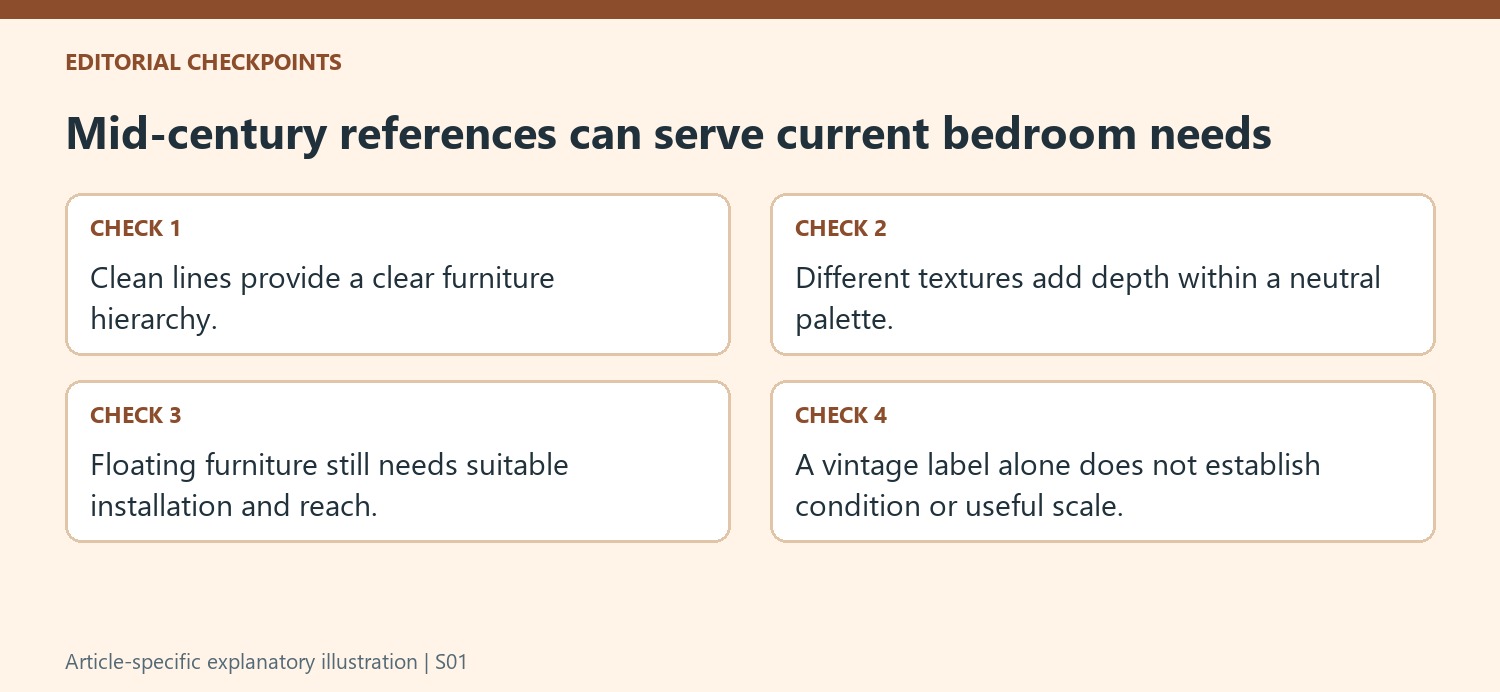
Floating nightstands and integrated headboards appear in the reference as ways to keep bedside arrangements visually clear. They still need suitable storage, reachable surfaces and appropriate installation. Evaluate those requirements before treating a wall-mounted form as an automatic solution to a tight room or assuming a large bed will improve every small floor plan.
Likewise, assess a vintage piece for dimensions, condition and useful function as well as character. One distinctive table or chair can connect the bedroom with the period without requiring every furnishing to match. Keep the bed comfortable, the storage usable and the circulation practical. Those decisions preserve the source's emphasis on functionality while allowing wood, texture and selected older pieces to provide warmth and individuality.
References
- Mid-century modern bedroom ideas – 9 ways to channel this classic style with a current and contemporary feel. Homes and Gardens; Lilith Hudson.
Functional furnishings and varied texture support the style's quieter structure.


Leave a Comment
Comments (0)