Industrial Detail in a Contemporary Farmhouse
Designer Adam Hunter's Tennessee farmhouse combines rustic materials with a more industrial layer. Sleek metallic details sit alongside textured natural finishes, preserving warmth while giving the interior a contemporary edge. The relationship between the house and its extensive landscape also shaped the overall design.
The great room makes this contrast visible through its high vaulted ceiling, substantial sofa, and custom metal fireplace surrounds. Rather than relying on rustic accessories alone, the project uses architectural scale and material changes to establish character. Smaller interiors can apply the same principle by balancing warmer surfaces with a limited number of more precise metal details.
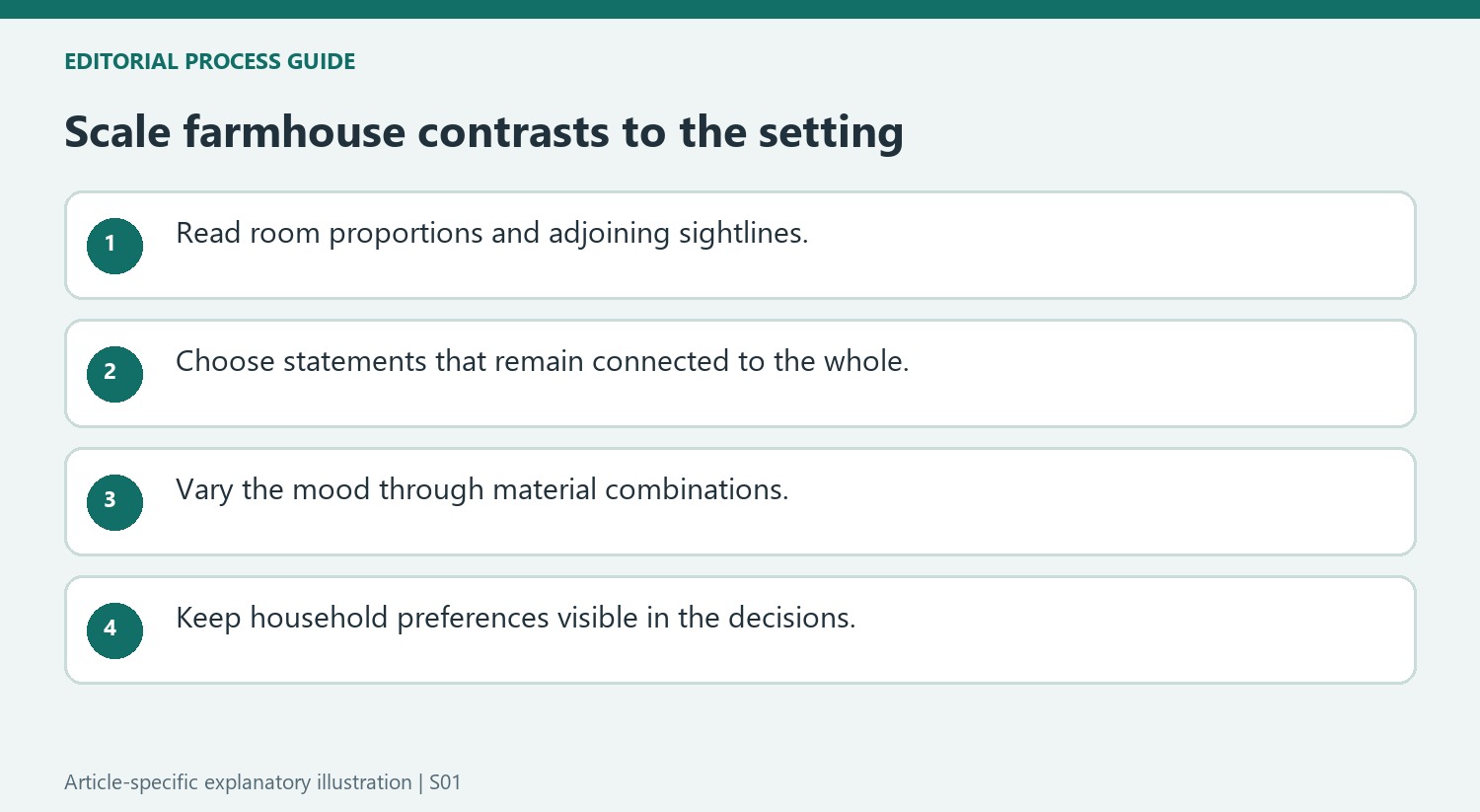
Give the large architectural volume an organizing structure
The Tennessee project described in the source uses an expansive vaulted great room, with living and dining functions visible together. Adam Hunter combines a substantial sofa, distinctive lighting, and metal fireplace surrounds to establish recognizable areas within that volume. The design challenge is therefore one of scale and continuity as well as style. In a smaller room, borrow the idea of a clear anchor and related materials rather than copying unusually large fixtures or furniture.
Compare the raw and polished surfaces across neighboring zones
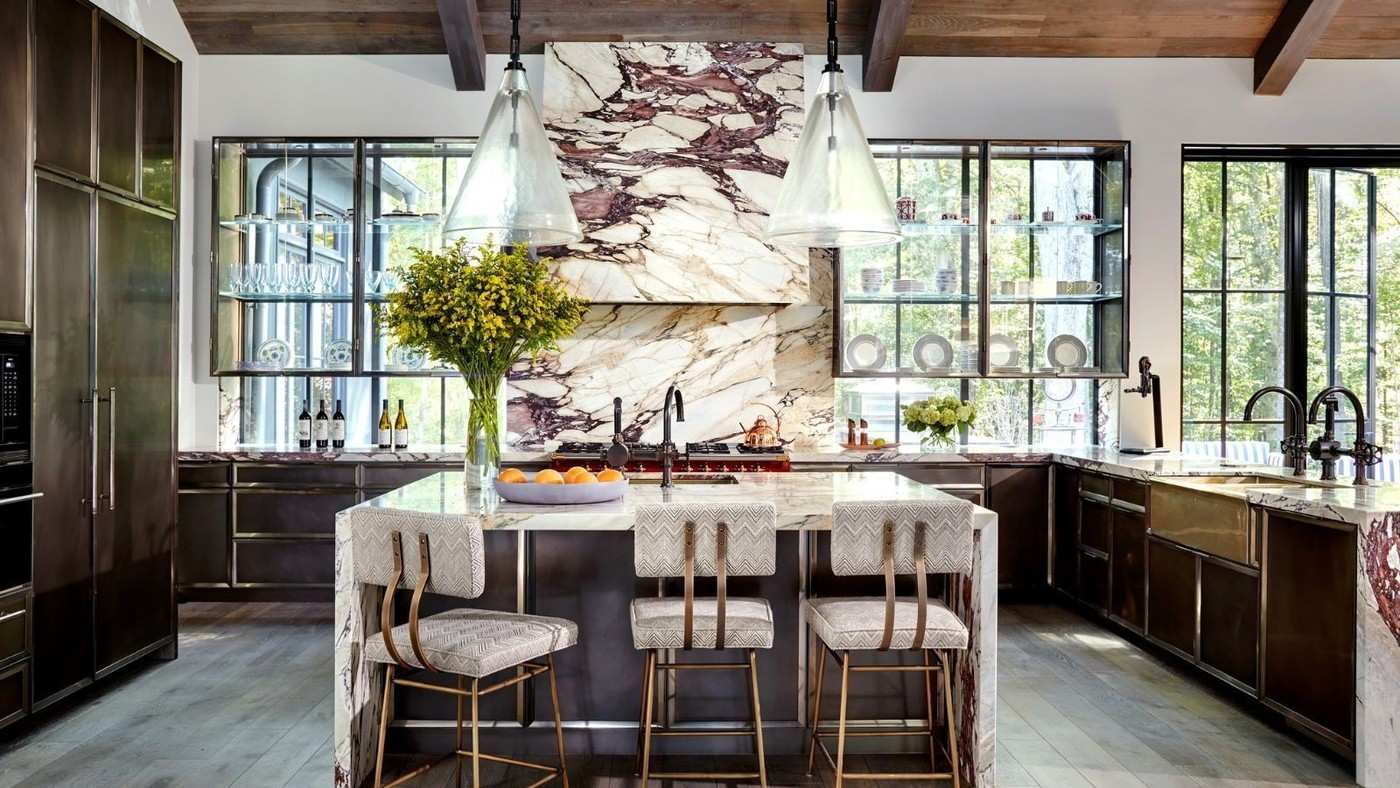
The dining table combines a live edge with blue resin, while the broader room uses washed oak, metal details, and layered textiles. In the kitchen, strongly veined marble and bronze-finished cabinetry provide another version of the contrast. These materials remain visually active even without numerous small accessories. Decide which surface should carry the most detail and give it quieter neighbors. The project's industrial character comes from those deliberate relationships with timber and upholstery, not simply from adding exposed metal to every corner of a farmhouse.
Make contrasts respond to the scale of the rooms
The Tennessee farmhouse uses substantial materials and strong forms within unusually generous spaces. The great room's vaulted ceiling, for example, creates a setting where a large sofa, feature lighting, and pronounced fireplace surrounds can register clearly. The kitchen is also visible from the living and dining areas, so its marble hood and island participate in the wider composition. These relationships matter when translating the idea to a smaller home. The useful principle is not to reproduce the quantity or size of the statement pieces. It is to select contrasts that remain legible within the actual space and connect neighboring areas rather than letting each visible element compete for the same amount of attention.
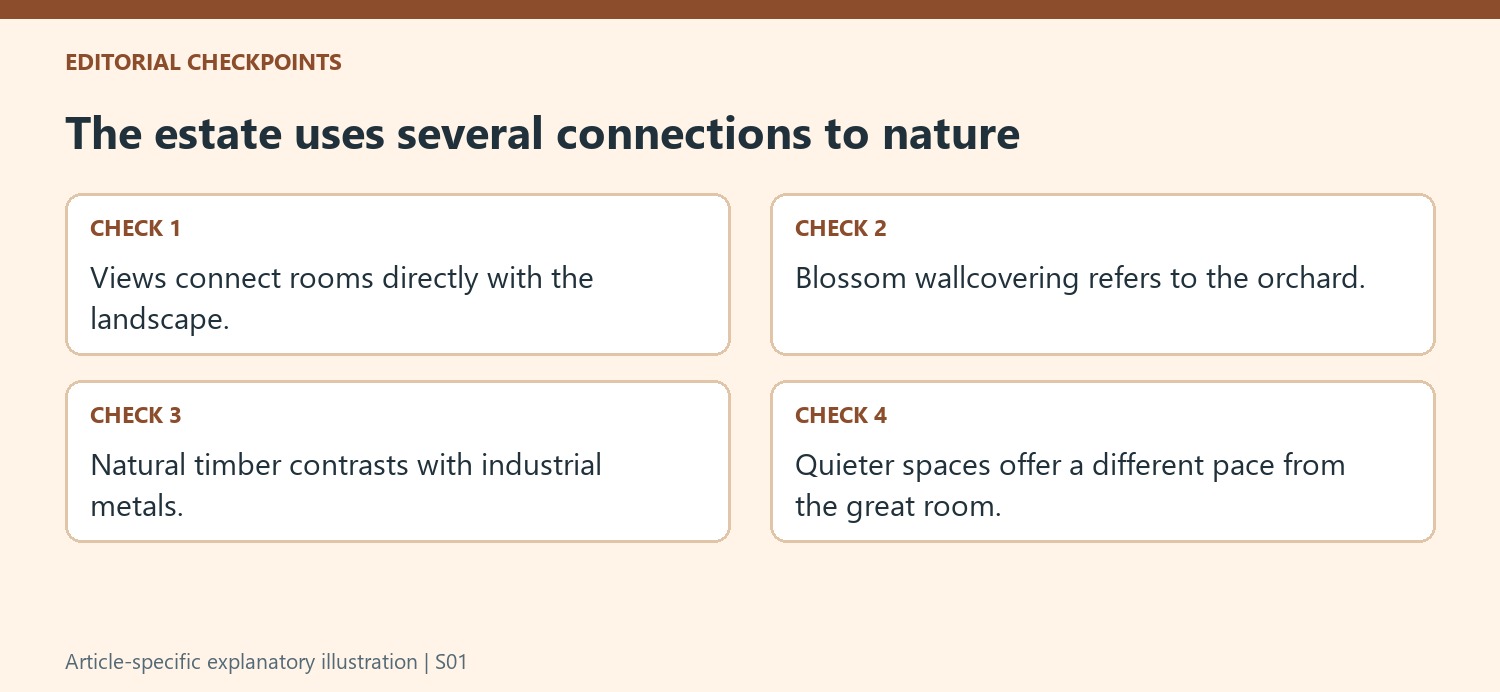
Repeat material relationships while varying the mood
Designer Adam Hunter describes balancing raw rustic qualities with sleeker industrial elements. Metal, natural wood, marble, leather, and textiles appear in different combinations across the house. Some rooms are expansive and dramatic; others offer a more intimate retreat. This allows the same broader design direction to support more than one atmosphere. The living room's blossom wallcovering, for instance, refers to the estate's orchard, while other spaces connect with the landscape through views or colors. The source therefore presents continuity through relationships rather than identical finishes in every room. Material contrast becomes a way to link natural surroundings with contemporary detail, while each space can still respond to its own scale and activity.
Keep personal decisions visible within a large project
The feature records specific choices shaped by the owners, including a requested blue in the family room and a program of places for rest across the estate. Those details prevent the design from being understood only as a set of expensive finishes. The designer also emphasizes listening, collaboration, and adapting throughout the process. A more modest project can take that aspect seriously without borrowing the estate's scale or bespoke products. Identifying the household's particular preferences gives a reason for the palette, the material combination, and the distinction among rooms. The most useful lesson is that contemporary farmhouse can accommodate personal and industrial references when the whole arrangement remains connected to its occupants and the setting around the building.
References
- Natural and industrial elements combine in this contemporary farmhouse home. Homes and Gardens; Karen Darlow.
A Tennessee home balances raw texture, metalwork, and generous living spaces.


Leave a Comment
Comments (0)